
AltusHost Review: Is Its Network Fit Strong Enough for Serious Projects?

“

Choosing hosting often starts with one practical question: does the provider fit your region, project size, and comfort with plan details? This AltusHost review examines its European hosting position across web hosting, VPS, reseller, and dedicated servers. It covers the cPanel-based stack, migration assistance, advertised support, uptime guarantee, service range, and visible starting prices. It also flags unpublished hardware specifications, renewal costs, refund timing, support channels, and exact server locations, helping European-focused businesses decide whether AltusHost belongs on their shortlist before checkout.

Last Updated: August 21, 2026
Written by:
Andreea Radacina
4.6/5
Excellent
Pricing
Business Hosting €10.95 - €33.95/mo
Reseller Hosting €29.95 - €89.95/mo
Dedicated Server €149.95 - €499.95/mo
Server Locations
Europe Europe
Quick Navigation

AltusHost at a Glance

Performance GradeExcellent
Hosting TypesBusiness Hosting, VPS Hosting, Reseller Hosting, Dedicated Server
Free SSLYes
Storage50 GB SSD
Websites5
Control panelcPanel
Starting Price €10.95/mo

AltusHost Strengths and Buying Trade-Offs

Pros

  • European-focused hosting across multiple service families
  • Business hosting uses cPanel, CloudLinux, and LiteSpeed
  • VPS hosting advertises scalability across European data centers
  • White-label reseller hosting suits agency-oriented use
  • Free migration service can reduce switching friction
  • 24/7 technical support is advertised
  • Dedicated hosting includes optional management

Cons

  • Exact data-center cities and countries are not published
  • Renewal pricing and billing-term details are not published
  • VPS and dedicated hardware specifications are not published
  • Money-back timing and support channels require confirmation

Where AltusHost Fits European Hosting Buyers
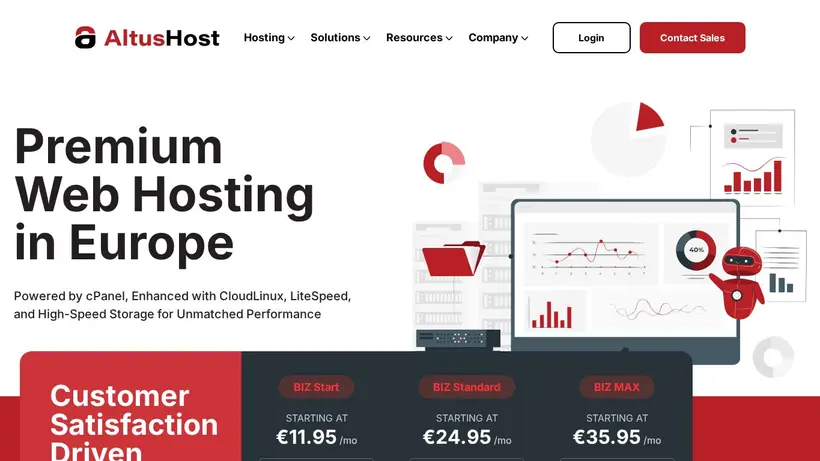
AltusHost hosting deals pricing plans and promo codes screenshot
Hosting shortlists often begin with a regional question: where should a business website, client portfolio, or growing online project live? AltusHost enters that conversation as a European-focused provider covering business web hosting, VPS hosting, reseller hosting, and dedicated servers. That range makes the brand relevant to more than one type of buyer, but it also creates a practical checkout challenge: the service family may be clear while the plan-level details remain incomplete.

This AltusHost review looks at the provider as a shortlist option rather than treating every hosting buyer alike. The useful question is not whether one service is universally best. It is whether AltusHost fits your project’s location preference, technical responsibility, migration needs, and expected growth. A small business may want a familiar cPanel-based environment. An agency may care more about white-label reseller hosting. A growing project may be drawn toward scalable VPS hosting, while an organization with a defined infrastructure brief may investigate dedicated servers.

The review also separates attractive positioning from details that still need confirmation. AltusHost advertises European data hosting, European data centers, local routing, a 99.9% Network Uptime Guarantee, 24/7 technical support, expert human assistance, fast response, and free migration service. Business web hosting is described with cPanel, CloudLinux, and LiteSpeed. Those points create a coherent reason to consider the provider. They do not, by themselves, answer every buying question.

Before payment, buyers may still need VPS CPU, RAM, storage, bandwidth, and operating-system details; dedicated-server hardware specifications; reseller limits; renewal pricing; setup fees; billing-term conditions; exact data-center cities; support channels; detailed uptime terms; and the scope of the advertised Money Back Guarantee. None of those omissions automatically makes AltusHost a poor fit. They define the questions that separate a confident purchase from an assumption.

Short version: AltusHost belongs on a European hosting shortlist when regional infrastructure, broad service coverage, and migration help matter. The safer buying path is to choose the service family first, request the missing commercial and technical details, then compare the complete offer with the project’s actual needs.

Why AltusHost Belongs on European Shortlists

A buyer comparing hosting providers may feel pulled between two competing instincts. One instinct favors a familiar global name. The other wants infrastructure, support, and service options that feel closer to the project’s intended audience. AltusHost is positioned for the second conversation: a European provider offering web hosting, reseller hosting, VPS, and dedicated servers across Europe.

That positioning matters when the buyer’s decision includes more than a monthly figure. A European website owner may care about data being hosted in Europe. An agency may want a provider capable of supporting both its own site and client-facing services. A growing business may prefer a path that begins with conventional web hosting and later reaches VPS or dedicated infrastructure. AltusHost’s portfolio addresses those different directions without forcing the buyer to begin with a highly specialized product.

The alternative question is not simply, “Does AltusHost have enough services?” It is, “Does its service range reduce the risk of choosing the wrong level of hosting today?” The answer is promising, with an important qualification: the portfolio is easier to understand at the category level than at the complete plan-specification level.

A portfolio built around different buyers

Business web hosting is the most conventional entry point. AltusHost describes it as reliable web hosting optimized for performance, security, and ease of use, using cPanel, CloudLinux, and LiteSpeed. For a WordPress site owner or small business, those names provide a recognizable platform direction. The buyer can reasonably understand that the offer is built around a familiar hosting control environment rather than an unexplained custom stack.

That does not establish a particular page-load result, resource allocation, backup policy, or WordPress configuration. Those details are not published in the available material. The useful conclusion is narrower: business web hosting appears aimed at buyers who prefer standard hosting administration and want a conventional starting point.

VPS hosting serves a different moment. A project may have outgrown basic hosting, need a more distinct resource environment, or simply want a scalable path. AltusHost describes its VPS service as scalable, with high availability across multiple European data centers. This is a sensible fit for a buyer thinking about growth, but the word “scalable” should lead to a specification request. CPU, RAM, storage, bandwidth, operating system, management scope, and upgrade mechanics are not published here.

Reseller hosting has a clearer commercial angle. AltusHost advertises white-label reseller hosting designed to help manage and grow web-hosting clients. That makes the service relevant to agencies, freelancers, and entrepreneurs who want client hosting under their own brand. The buyer still needs to confirm account limits, resource allocations, billing rules, migration scope, and support boundaries before promising anything to clients.

Dedicated hosting represents the most infrastructure-oriented path in the portfolio. AltusHost describes dedicated servers as enterprise-grade and says optional management is available. A separate listing emphasizes European locations and local routing. These points may appeal to organizations that need dedicated infrastructure or want a managed option, but the available facts do not include processor, memory, storage, bandwidth, network, or management specifications.

The portfolio’s strength is directional clarity. It gives different buyers a logical place to start. Its limitation is not a demonstrated service failure; it is the amount of detail a technical buyer must still obtain before comparing like for like.

European infrastructure shapes the decision

Location can be a quiet preference until it becomes a business requirement. A site owner serving European visitors may want data hosted in Europe. A company may have internal expectations around regional data handling. An agency may simply prefer a provider whose stated infrastructure focus matches its clients’ audience.

AltusHost advertises data hosted in Europe, European data centers, and European local routing. It also states that its data centers hold at least ISO 9001 and ISO 27001 certificates. These claims give the brand a stronger regional identity than a generic “global hosting” description. They help explain why AltusHost may appear on a buyer’s shortlist even before price or plan detail is compared.

Still, exact cities and countries are not published in the supplied material. That matters if the buyer must select a particular jurisdiction, estimate regional latency, satisfy an internal location policy, or compare facilities directly. “Europe” is useful positioning; it is not a city-level placement answer.

Consider a small online store preparing for a regional campaign. Its owner may feel relief seeing European hosting and local routing mentioned. The next practical step is not to assume that the nearest possible facility is available. It is to ask which location would host the account, whether the selected plan is available there, and whether any routing conditions apply.

Regional fit deserves confirmation at the order stage. AltusHost’s location story supports consideration, especially for European-focused projects, but it should not be converted into a universal speed or latency promise.

Migration help lowers switching anxiety

Changing hosts can feel more dangerous than choosing a host for a new website. A live WordPress installation may include databases, email, DNS records, scheduled tasks, media files, and client expectations. Even a technically simple move can become stressful when the site earns revenue or supports a business operation.

AltusHost advertises a free migration service and says it will migrate a website to its servers in a least inconvenient way. That is one of the most buyer-friendly parts of the positioning because it addresses the moment when hosting decisions become real. A buyer may not need another feature label; they may need confidence that the move will not become a weekend emergency.

The scope remains unpublished. The available material does not state whether migration includes email, DNS, databases, post-move checks, staging, timing, downtime handling, or particular site types. Buyers should ask for that scope in writing, especially when moving several domains or client websites.

For a single business site, the migration promise may remove enough friction to justify a closer look. For an agency, the important question becomes repeatability: can the same process support multiple client accounts, and what responsibilities remain with the agency? Those answers are not available here, so they belong in the pre-purchase conversation.

Free migration service is a practical advantage, not a blank check. It reduces the emotional barrier to switching while leaving the operational boundaries to confirm.

What the infrastructure claims do not answer

AltusHost advertises a 99.9% Network Uptime Guarantee with all services. It also highlights high-quality hardware for its servers and network. Those statements support the provider’s reliability-oriented positioning, but they do not amount to a published performance test or a complete SLA explanation.

The available material does not state how uptime is measured, which exclusions apply, what remedies are available, or how claims are handled. A buyer with ordinary business hosting needs may regard the guarantee as a positive signal. A buyer with strict availability obligations should request the full terms before relying on it contractually.

There are no published independent performance results in the available material. There are also no detailed VPS or dedicated hardware specifications. That prevents a precise comparison of compute capacity, storage technology, bandwidth, or workload suitability. The fair reading is positive but measured: AltusHost presents a credible European infrastructure story, while technical buyers need plan-level confirmation.

Compared with similar hosts, the important shortlist distinction is therefore not a proven universal performance advantage. It is the combination of regional positioning, a broad service ladder, advertised uptime, and a need for more detailed due diligence.

Choosing the Right AltusHost Service

The most common hosting mistake is choosing by label alone. “VPS” may sound more suitable than web hosting because it appears more powerful. “Dedicated” may sound safer because it appears more exclusive. Yet the right choice depends on the site, the operator’s technical confidence, the desired management level, and the information required before checkout.

AltusHost’s service families create a useful decision ladder, but the ladder should be climbed deliberately. Start with the project’s responsibility level. Who manages the server? Which resources must be guaranteed or documented? Is the buyer hosting one website, several client accounts, or an application with a defined technical profile? Does the project require a specific European city or only European data hosting?

The following distinctions help turn a broad portfolio into a practical shortlist.

Business hosting for familiar administration

A buyer with a business website often wants the least complicated path that still feels credible. The emotional goal is simple: publish the site, manage domains and email, and avoid becoming the unpaid infrastructure administrator.

AltusHost’s business web hosting is presented as performance-, security-, and ease-of-use-oriented. The stack includes cPanel, CloudLinux, and LiteSpeed. That combination gives the offer a familiar shape for buyers who have used conventional hosting before. It may suit a business site, WordPress installation, or smaller web project whose needs align with standard hosting administration.

The platform labels do not reveal the complete commercial offer. The web-hosting price is not published in the available material. Resource limits, backup details, email allowances, migration conditions, and account restrictions are also not stated. A buyer should ask for the exact plan comparison rather than infer those details from the stack.

This service family makes sense when the priority is a recognizable control environment and low operational complexity. It is less suitable as a decision made solely on the promise of future scaling, because the available material does not describe the specific upgrade path from business hosting to another service.

A practical buyer might ask:

  • Which business hosting plan matches the site’s expected resource use?
  • What are the storage, bandwidth, account, database, and email limits?
  • Does the free migration service cover the site’s DNS, email, and database?
  • What renewal price and billing term apply?
  • Which European location would host the account?

Choose business web hosting when familiarity matters more than server-level control. Confirm the missing limits and final price before treating it as the default choice.

VPS hosting for projects expecting growth

Growth changes the buyer’s anxiety. The concern is no longer only whether a website can launch. It becomes whether the hosting environment can accommodate more traffic, applications, integrations, or operational demands without forcing an immediate provider change.

AltusHost describes its VPS hosting as scalable and available across multiple European data centers, with a starting price of €11.95 per month. That makes VPS the clearest service family for a project that wants a more deliberate growth path. The European positioning may also appeal to buyers whose audience or data preference is regional.

However, VPS is not merely a larger price card. The buyer needs to know the actual CPU, RAM, storage, bandwidth, operating system, management model, backup arrangements, and upgrade options. Those details are not published in the available material. Without them, the €11.95 starting point cannot answer whether a particular WordPress site, application, or development workload is properly matched.

A project owner who understands server administration may be comfortable requesting those details. A less technical buyer should clarify what AltusHost manages and what remains the customer’s responsibility. The presence of an optional management position in the dedicated range does not establish the same arrangement for every VPS plan.

The 99.9% Network Uptime Guarantee is a positive part of the positioning, but the buyer should request the SLA terms, exclusions, measurement method, and remedies. A guarantee headline can support a shortlist; it cannot replace an agreement review.

VPS is the sensible conversation when growth is real, not when the label merely sounds impressive. Select it when the project has a known reason for additional control or scalability, then verify the resources and management boundaries.

Reseller hosting for branded client work

Agency hosting creates a different kind of pressure. The buyer is not only protecting one website. They may be responsible for several clients, each expecting a stable experience and clear communication. White-label presentation can matter as much as raw infrastructure because the hosting relationship may sit under the agency’s own brand.

AltusHost advertises white-label reseller hosting intended to help manage and grow web-hosting clients. It lists reseller hosting from €15 per month. That combination creates a clear reason for agencies, freelancers, and entrepreneurs to investigate the service. The offer is positioned around client management and scalable business use rather than personal website hosting.

The commercial calculation remains incomplete without reseller specifications. The available material does not publish account limits, storage, bandwidth, control-panel structure, billing tools, branding controls, resource allocation, migration scope, or support responsibilities. An agency should not promise a client package based only on the white-label label.

A careful reseller buyer should also ask how support works when the agency is the customer-facing layer. Is the provider available to the agency only, or can it assist with end-client issues? Which incidents fall within the advertised 24/7 technical support? Are migrations handled per account or per website? Those channels and boundaries are not published.

The strongest use case is an operator who values a branded hosting path and is willing to clarify the operating model before selling it onward. The weaker use case is a buyer seeking a fully documented reseller toolkit without additional questions.

Reseller hosting may be the most commercially distinctive option in the portfolio. Its value depends on the details behind white-label delivery, not on the phrase alone.

Dedicated hosting for defined infrastructure needs

Dedicated hosting often enters the conversation after a project has clearer infrastructure requirements. The buyer may have a workload, compliance expectation, performance profile, or management preference that makes shared resources feel too uncertain. At that point, a low starting price is less useful than an exact specification sheet.

AltusHost describes its dedicated servers as enterprise-grade and advertises optional management. A dedicated listing starts at €29 per month, while another European-locations listing starts at €149 per month. These are visibly different entry points, and the buyer should not assume they represent identical hardware, management, routing, or commercial terms.

The available material does not publish processor models, memory, storage, bandwidth, network details, operating-system options, management inclusions, setup fees, or renewal costs. It also does not identify the specific European locations attached to the listings. Those omissions matter more for dedicated buyers because the purchase usually reflects a defined technical brief.

The right next step is a written quote or plan specification. Ask what the selected price includes, whether management is optional or included, which location is available, what replacement or maintenance terms apply, and how the 99.9% network guarantee applies to the selected service. If the project needs a specific city or country, request that before ordering.

Dedicated hosting is therefore a plausible fit for organizations that want dedicated infrastructure and can evaluate a customized offer. It is a poor fit for buyers who need every hardware and policy detail published upfront and do not want a sales clarification step.

Pricing needs a total-cost conversation

Starting prices are useful for sorting a shortlist, but they do not establish final value. AltusHost publishes €11.95 per month for VPS hosting, €15 per month for reseller hosting, €29 per month for dedicated servers, and €149 per month for a European-locations dedicated listing. The web-hosting price is not published in the available material.

These figures help establish the portfolio’s entry points. They do not disclose renewal pricing, setup fees, billing-term variations, or currency-conversion details. A buyer comparing providers should avoid treating the listed amounts as complete ownership costs.

The Money Back Guarantee also needs clarification. AltusHost advertises one, but the refund window, exclusions, and eligibility conditions are not published. The buyer should read the applicable policy and confirm whether the selected product qualifies. “Money back” is a useful reassurance phrase only after its conditions are understood.

Use the Product Plans section to identify the relevant service family, then request a complete quote. The comparison should include the exact plan name, included resources, billing term, renewal amount, setup charges, management scope, location, and refund conditions. This approach may take a few extra minutes, but it protects the buyer from comparing a published starting figure with another provider’s fully specified plan.

Questions to settle before checkout

A buyer does not need to interrogate every marketing sentence. A short, targeted checklist is enough to turn AltusHost’s broad positioning into a reliable purchasing decision.

  • Plan identity: What exact plan corresponds to the advertised starting price?
  • Resources: What CPU, RAM, storage, bandwidth, and account limits apply?
  • Management: Which tasks does AltusHost handle, especially for VPS and dedicated hosting?
  • Location: Which city and country will host the service?
  • Billing: What term applies, and what is the renewal price?
  • Migration: Does the free service include DNS, email, databases, and post-move checks?
  • Support: Which channels are available, and what support boundaries apply?
  • Uptime: What exclusions, measurement rules, and remedies accompany the 99.9% guarantee?
  • Refunds: What is the Money Back Guarantee window and eligibility policy?

This is not excessive caution. It is the normal difference between choosing a hosting category and choosing a hosting contract.

AltusHost’s best-fit buyer is comfortable with a provider whose regional identity and service range are clear, while some plan and policy details require confirmation. That buyer may be a European-focused business, an agency seeking white-label hosting, a growing project considering VPS, or an organization exploring dedicated infrastructure with optional management.

The buyer who should slow down has a stricter requirement: a named data-center city, published hardware specifications, exact renewal costs, detailed SLA remedies, documented refund timing, or a specific support channel must be available before purchase. AltusHost may still answer those questions directly, but the supplied material does not answer them in advance.

That distinction keeps the recommendation useful. AltusHost does not need to be everything for everyone. Its role is clearer as a European-focused hosting shortlist option with broad service coverage, familiar business-hosting components, advertised technical support, and migration assistance. The final choice depends on whether the provider can fill the remaining detail gaps for the specific project.

Choose AltusHost for its European-focused range and migration-minded support, but confirm specifications, renewal costs, refund terms, support channels, and exact server location before paying.


Performance: Confidence for European Projects 4.6/5

A buyer usually notices performance only when a page stalls during a launch, checkout, or client presentation. AltusHost positions its services around European infrastructure, high-quality server and network hardware, and a 99.9% Network Uptime Guarantee across its services. That creates a reassuring starting point for European-focused websites, but it does not replace site-specific testing or detailed hardware information. The VPS range is described as scalable, with high availability across multiple European data centers. That matters when a project may outgrow basic hosting and need a clearer path toward dedicated resources. Business web hosting uses cPanel, CloudLinux, and LiteSpeed, a familiar stack for many WordPress and small-business users. The practical appeal is less about impressive terminology than about choosing a service family that matches the site’s workload. European placement is the central performance advantage. Buyers serving European visitors may prefer data hosted in Europe and local routing described by the provider. Exact cities and countries are not published, however, so location-sensitive buyers should confirm the proposed facility before ordering. A regional position can be useful; it should not be mistaken for a universal latency promise. The uptime claim also needs context. AltusHost advertises 99.9% network uptime, but the supplied material does not publish detailed SLA exclusions, measurement rules, or remedies. That is a checkout question, not an automatic red flag. Buyers with strict availability obligations should request the full terms. Performance test results, CPU details, RAM, storage, and bandwidth are not published for the VPS or dedicated offerings. That limits precise comparisons between plans. The fair reading is positive but measured: AltusHost offers a credible infrastructure story for European hosting, while technical buyers need a pre-purchase specification check. Score: 4.6/5 for the stated regional positioning and uptime promise, with plan-level detail still worth confirming.

Features: Room to Change Direction 4.6/5

Growth rarely follows the original hosting plan. A business may begin with one WordPress site, add client projects, or discover that shared-style hosting no longer feels comfortable. AltusHost’s useful feature story is its range: business web hosting, VPS, reseller hosting, and dedicated servers sit within the same provider’s portfolio. That breadth reduces the need to change brands when the project changes shape. Business web hosting is presented with cPanel, CloudLinux, and LiteSpeed. Those named components give buyers a clearer picture of the platform than a vague “business hosting” label would. They also support a familiar management model for users who want conventional hosting administration rather than an entirely custom environment. VPS hosting is described as scalable and available across multiple European data centers. Reseller hosting adds white-label positioning and client-management use, which may appeal to agencies or entrepreneurs building a branded hosting service. Dedicated servers are described as enterprise-grade, with optional management, while another dedicated listing emphasizes European locations and local routing.

Choose Features by Growth Path

The strongest fit depends on the next decision, not the longest feature list. A site owner may start with business web hosting; a growing application may need VPS scalability; an agency may value white-label reseller hosting; an organization with a clear infrastructure requirement may examine dedicated hosting. The feature advantage is choice across service families. Important technical details remain unpublished. The available material does not state VPS CPU, RAM, storage, bandwidth, operating systems, reseller limits, or dedicated-server hardware. Security feature details are also not separately documented, although AltusHost says data is hosted in Europe and that its data centers hold at least ISO 9001 and ISO 27001 certificates. AltusHost offers useful direction without publishing every constraint. Buyers should ask for resource limits, migration scope, management boundaries, and upgrade paths before paying. Score: 4.6/5 for service breadth and recognizable hosting components.

What buyers should verify next

This checkpoint keeps the section balanced by connecting evidence back to the purchase decision, the trade-off a buyer should verify, and the practical next step before checkout.

Ease: Familiar Tools, Smoother Moves 4.6/5

Hosting becomes stressful before the first login, especially when a live WordPress site, email accounts, DNS records, and client expectations are involved. AltusHost addresses that anxiety with a free migration service and a business-hosting stack built around cPanel, CloudLinux, and LiteSpeed. For buyers leaving another provider, those details create a practical starting point: migration help may reduce the technical burden, while familiar tools may shorten the learning curve. The migration promise matters most to a business owner who cannot afford a long interruption. AltusHost says it will move websites to its servers in a least inconvenient way. That is encouraging, but the published information does not define the service boundary. Buyers should confirm whether the offer includes databases, email, DNS, media files, staging, post-migration checks, multiple domains, or downtime coordination. A clear written scope prevents a helpful promise from becoming an assumption.

Familiar Control Helps New Buyers

cPanel gives conventional hosting users a recognizable administration environment. CloudLinux and LiteSpeed further clarify the intended business-hosting setup, although they do not establish a specific onboarding workflow or performance result. Buyers already familiar with cPanel may feel more comfortable managing domains, files, databases, and email than they would with an unfamiliar proprietary dashboard.

Higher-Tier Choices Need More Guidance

Ease becomes less predictable when the buyer considers VPS, reseller, or dedicated hosting. The available information does not explain operating-system choices, backup responsibilities, server management, upgrade steps, or reseller controls. A less technical customer should ask what AltusHost manages and what remains the customer’s responsibility. That question is particularly important before choosing VPS or dedicated hosting simply because the label sounds more capable. The practical trade-off is clear: migration assistance and familiar business-hosting tools reduce friction, while incomplete onboarding detail requires a short pre-purchase conversation. AltusHost earns a 4.6/5 for ease because its stated migration help and recognizable stack support a reassuring path without proving that every service family is equally simple to operate.

Support: Reassurance Before Problems Escalate 4.6/5

Support matters most when the dashboard stops feeling obvious. A WordPress owner moving a revenue-generating site may worry about DNS timing. An agency may wonder who handles a client incident. A VPS buyer may need to know whether a server configuration question is included. AltusHost responds to those concerns by advertising 24/7 technical support, expert human support, fast response, and free migration service. That message gives the provider a reassuring place on a European hosting shortlist. Human assistance can matter more than another feature label when the buyer is changing providers or selecting a service family for the first time. The migration offer also connects support to a concrete buyer moment rather than leaving the claim abstract.

Support Matters During Migration

A host change can involve files, databases, email, DNS, and post-move verification. AltusHost advertises free migration, but the published information does not state whether those elements are included or how downtime is handled. Buyers should request the migration scope in writing. Agencies should also confirm whether the process can cover multiple client sites and which tasks remain their responsibility.

Technical Boundaries Need Confirmation

Specific support channels are not published. The available information does not confirm phone, live chat, ticket, or email support. Response-time targets, escalation rules, language coverage, and product-specific boundaries are also not stated. For VPS and dedicated hosting, ask whether support covers operating-system issues, applications, network problems, or only the underlying service. Optional management is advertised for dedicated hosting, but its exact inclusions remain unspecified. AltusHost also highlights high-quality hardware for its servers and network. That supports the broader reliability positioning, but it does not provide an independent support record or measured response time. The useful reading is positive but practical: support is advertised clearly, while the channel and scope still belong on the checkout checklist. “24/7 technical support” is reassuring only when you know how to reach it and what it covers. The score of 4.6/5 is fair because the provider presents human assistance, fast response, and migration help, while buyers must confirm the operational details before relying on them.

Pricing: Useful Starting Points, Confirmed Total Cost 4.5/5

A starting price can make a hosting shortlist feel manageable. The harder question arrives before payment: what exactly does that figure include, and will the bill remain explainable later? AltusHost publishes starting prices for VPS hosting at €11.95 per month, reseller hosting at €15 per month, dedicated servers at €29 per month, and a European-locations dedicated listing at €149 per month. Business web-hosting pricing is not published in the available information. Those figures help buyers understand the provider’s service range. They do not form a complete like-for-like comparison. Renewal prices, setup fees, billing-term variations, and currency-conversion details are not published. A buyer comparing AltusHost with another provider should therefore avoid treating the displayed amount as the complete ownership cost. Ask for the exact plan, billing term, initial charge, renewal amount, and included resources.

Match Price to Responsibility

Value depends on the job. A small business may prefer the familiar cPanel, CloudLinux, and LiteSpeed stack, but its exact price and limits require confirmation. A growing project may investigate the VPS starting point, while a technical buyer should first confirm CPU, RAM, storage, bandwidth, operating system, management, and backup responsibilities. An agency may find the €15 reseller starting point relevant, yet white-label controls, account limits, and client-support boundaries remain unspecified.

Read Guarantees Before Checkout

AltusHost advertises a Money Back Guarantee. The refund window, exclusions, eligibility conditions, and product coverage are not published. That makes the guarantee a reason to ask for the applicable policy, not a basis for assuming a specific refund period. The same care applies to the advertised 99.9% Network Uptime Guarantee: detailed SLA terms and remedies require confirmation. Use Product Plans to identify the relevant service family, then request a complete quote. The fair pricing question is not “Is the starting price cheap?” but “What does it buy, and what changes at renewal?” AltusHost earns 4.5/5 because its published entry points are useful sorting signals, while missing commercial terms prevent a stronger fairness judgment. The score remains positive for buyers willing to confirm total cost before ordering.

AltusHost Plans Compared by Buyer Fit

AltusHost spans business web hosting, VPS, reseller hosting, and dedicated servers. Compare the service family first, then confirm CPU, RAM, storage, bandwidth, billing term, renewal price, management scope, and server location. Published starting prices exist for several categories, but complete specifications, renewal pricing, setup fees, and billing variations are not published.

Choose business hosting for the cPanel, CloudLinux, and LiteSpeed stack; VPS for advertised scalability; reseller hosting for white-label client work; or dedicated hosting for defined infrastructure needs. Confirm the exact plan, included resources, renewal cost, support channel, location, and Money Back Guarantee terms before payment.

Business Hosting

BIZ Start

€10.95/mo

Not listed in source.

  • Control panelcPanel
  • PlatformCloudLinux
  • Web serverLiteSpeed
  • Free SSLYes
  • Storage50 GB SSD
  • Websites5
  • BandwidthUnlimited
Order Now

BIZ Standard

€18.95/mo

Not listed in source.

  • Control panelcPanel
  • PlatformCloudLinux
  • Web serverLiteSpeed
  • Free SSLYes
  • Storage100 GB SSD
  • Websites20
  • BandwidthUnlimited
Order Now

BIZ MAX

€33.95/mo

Not listed in source.

  • Control panelcPanel
  • PlatformCloudLinux
  • Web serverLiteSpeed
  • Free SSLYes
  • Storage200 GB SSD
  • WebsitesUnlimited
  • BandwidthUnlimited
Order Now

VPS Hosting

VM-1

€15.96/mo

Source price; renewal not listed.

  • ScalingScalable VPS hosting
  • AvailabilityEuropean data centers
  • PositioningHigh availability
  • vCPU2 CPU Cores
  • RAM2 GB
  • Storage40 GB
  • Bandwidth5 TB
View Plans

VM-2

€35.96/mo

Source price; renewal not listed.

  • ScalingScalable VPS hosting
  • AvailabilityEuropean data centers
  • PositioningHigh availability
  • vCPU4 CPU Cores
  • RAM4 GB
  • Storage80 GB
  • Bandwidth10 TB
View Plans

VM-3

€53.96/mo

Source price; renewal not listed.

  • ScalingScalable VPS hosting
  • AvailabilityEuropean data centers
  • PositioningHigh availability
  • vCPU6 CPU Cores
  • RAM6 GB
  • Storage120 GB
  • Bandwidth15 TB
View Plans

VM-4

€71.96/mo

Source price; renewal not listed.

  • ScalingScalable VPS hosting
  • AvailabilityEuropean data centers
  • PositioningHigh availability
  • vCPU8 CPU Cores
  • RAM8 GB
  • Storage160 GB
  • Bandwidth20 TB
View Plans

Reseller Hosting

RH-1

€29.95/mo

Source price; renewal not listed.

  • BrandingWhite-label hosting
  • Use caseClient management
  • PositioningScalable business use
  • Accounts50 cPanel
  • Storage50 GB Pure SSD
  • BandwidthUnlimited
  • White LabelIncluded
View Plans

RH-2

€59.95/mo

Source price; renewal not listed.

  • BrandingWhite-label hosting
  • Use caseClient management
  • PositioningScalable business use
  • Accounts100 cPanel
  • Storage100 GB Pure SSD
  • BandwidthUnlimited
  • White LabelIncluded
View Plans

RH-3

€89.95/mo

Source price; renewal not listed.

  • BrandingWhite-label hosting
  • Use caseClient management
  • PositioningScalable business use
  • Accounts150 cPanel
  • Storage150 GB Pure SSD
  • BandwidthUnlimited
  • White LabelIncluded
View Plans

Dedicated Server

Intel E-2286G

€149.95/mo

Source price; renewal not listed.

  • ClassEnterprise-grade servers
  • ManagementOptional management
  • LocationEuropean locations
  • CPU6 Cores / 12 Threads
  • RAM32 GB DDR4
  • Storage2x 480 GB SSD
  • Bandwidth50 TB
  • Network Port1 Gbps
View Plans

AMD EPYC 4344P

€199.95/mo

Source price; renewal not listed.

  • ClassEnterprise-grade servers
  • ManagementOptional management
  • LocationEuropean locations
  • CPU8 Cores / 16 Threads
  • RAM32 GB DDR5 ECC
  • Storage2x 960 GB NVMe
  • Bandwidth50 TB
  • Network Port10 Gbps
View Plans

AMD EPYC 7513

€499.95/mo

Source price; renewal not listed.

  • ClassEnterprise-grade servers
  • ManagementOptional management
  • LocationEuropean locations
  • CPU32 Cores / 64 Threads
  • RAM128 GB DDR4 ECC
  • Storage4x 960 GB NVMe
  • Bandwidth100 TB
  • Network Port10 Gbps
View Plans

A Strong European Shortlist, With Details to Confirm

AltusHost belongs on the shortlist for buyers seeking European-focused hosting across business web hosting, VPS, reseller hosting, and dedicated servers. Its broad service range gives different projects a logical starting point: familiar cPanel-based hosting for business sites, scalable VPS hosting for growing workloads, white-label reseller hosting for agencies, and dedicated hosting for organizations with defined infrastructure needs. The strongest reasons to consider it are its stated European data hosting, European data centers, local routing, cPanel, CloudLinux, LiteSpeed, advertised 24/7 technical support, free migration service, and 99.9% Network Uptime Guarantee. These claims create a coherent buyer proposition, particularly for European-focused businesses, agencies, resellers, and website owners anxious about migration. Best for: buyers who value regional positioning, broad service coverage, migration assistance, and a willingness to confirm plan details before checkout. For a standard business site, start with Business Web Hosting and request its exact resources and price. For a growing project, investigate Virtual Private Servers from €11.95 per month, then confirm CPU, RAM, storage, bandwidth, operating system, management, and backup responsibilities. Agencies should examine Reseller Hosting from €15 per month and verify white-label limits before selling it to clients. Dedicated buyers should request a written specification for the €29 or €149 starting listings. Not for: buyers who must have a published data-center city, exact renewal cost, detailed hardware specification, documented refund window, defined SLA remedies, or a named support channel before payment. Those requirements may be answerable directly, but they are not published here. Methodology: this review evaluates AltusHost’s published service descriptions, starting prices, infrastructure statements, support claims, migration promise, location information, and policy claims. It does not present hands-on speed tests, independent uptime measurements, or personal support experiences. The sensible next step is a written pre-purchase confirmation covering price, renewal, resources, location, management, migration scope, support channels, uptime terms, and Money Back Guarantee conditions. Bottom line: AltusHost is worth considering when European positioning and migration-minded support matter more than instant plan transparency. Choose it after the missing technical, commercial, policy, and location details are confirmed.

Frequently Asked Questions about AltusHost

AltusHost offers which hosting services?
AltusHost advertises business web hosting, VPS hosting, reseller hosting, and dedicated servers. Business hosting uses cPanel, CloudLinux, and LiteSpeed. VPS hosting is positioned as scalable, reseller hosting supports white-label client work, and dedicated hosting is described as enterprise-grade with optional management. The right choice depends on your project size, technical responsibility, client needs, and preference for European infrastructure. Complete plan specifications are not published, so confirm resources, management scope, and included services before ordering.
Does AltusHost offer European hosting locations?
AltusHost advertises European data centers, European local routing, and data hosted in Europe. It also states that its data centers hold at least ISO 9001 and ISO 27001 certificates. Specific cities and countries are not published. If your project requires a named jurisdiction, a particular city, or a confirmed facility, ask AltusHost which location applies to the selected service before checkout. The regional positioning supports European-focused buyers but does not establish a specific location or latency result.
What does AltusHost charge?
Published starting prices include €11.95 per month for VPS hosting, €15 per month for reseller hosting, €29 per month for dedicated servers, and €149 per month in a European-locations dedicated listing. Web-hosting pricing is not published. Renewal prices, setup fees, billing-term variations, and currency-conversion details are also not published. Treat the displayed amounts as starting points, then request the exact plan, total initial cost, renewal amount, billing term, and included resources.
Does AltusHost provide migration help?
AltusHost advertises a free migration service and says it will migrate websites to its servers in a least inconvenient way. The supplied information does not specify whether the service includes email, DNS, databases, post-migration checks, staging, downtime handling, or multiple websites. Buyers moving a business or client site should request the migration scope in writing. The advertised service can reduce switching anxiety, but its exact boundaries need confirmation before the move.
Does AltusHost offer 24/7 support?
AltusHost advertises 24/7 technical support, expert human support, and fast response. Specific channels are not published, so the available information does not confirm phone, live chat, ticket, or email support. Response targets, escalation rules, language coverage, and support boundaries are also not stated. Buyers should ask which channels apply to the selected product and what assistance covers, particularly for VPS, dedicated hosting, migration, and management-related issues.
Does AltusHost offer a money-back guarantee?
AltusHost advertises a Money Back Guarantee. The supplied information does not state the refund window, exclusions, eligibility conditions, or product coverage. Buyers should review the applicable policy and confirm whether the selected service qualifies before payment. The guarantee is a positive buying signal, but its practical value depends on the exact terms. Do not assume a specific refund duration without written confirmation from the provider.

ALTUSHOST ALTERNATIVES

4.9
  • Starting Price $5.59/mo
4.8
  • Starting Price $11.99/mo
4.7
  • Starting Price $1.00/mo
4.6
  • Starting Price $2.00/mo