

Matching Squidix to Your Specific Workload
The moment of realization usually happens at the worst possible time. A buyer does not wake up on a random Tuesday and decide to migrate their entire digital infrastructure for fun. Instead, the decision is forced upon them during a crisis: a Moodle learning environment freezes right in the middle of a final exam, or a heavily customized Joomla community portal throws a 500 internal server error during a major membership drive. In these high-stress scenarios, the massive scale of global cloud providers suddenly feels entirely useless. You do not need a globally distributed edge network with Kubernetes integration; you need a competent engineer to pick up the phone and fix the database connection. Compared with similar hosts that have aggressively automated their support and pushed smaller accounts into faceless ticketing queues, Squidix offers a deliberately different path. Established in 2010, this independent, Indianapolis-based provider has built its reputation not by chasing massive enterprise contracts, but by serving the specific, unglamorous needs of small businesses and niche community managers.
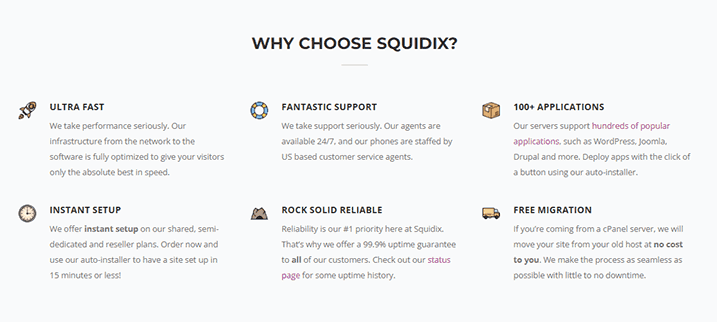
The positioning is clearer when you examine who actually stays with this host long-term in the 2026 market. As the hosting industry continues to consolidate into a handful of massive conglomerates, the personalized, high-touch support model has become incredibly rare. The typical Squidix user is the business owner who has outgrown cheap shared hosting but lacks the technical expertise to manage a bare-metal virtual private server. It is the educator who needs specialized maintenance for a resource-heavy application, rather than a generic one-click installer that breaks upon the first update. Squidix bridges the intimidating gap between entry-level hosting and enterprise infrastructure by offering a robust lineup of semi-dedicated plans, all managed through the familiar cPanel interface. They pair this hardware with 24/7 US-based phone support, creating an environment where technical friction is actively minimized and the focus remains entirely on the user’s core business operations.
However, choosing an independent regional host requires accepting certain trade-offs. The alternative question is whether your specific workload aligns with their highly localized infrastructure. If you require a sprawling network of Asian and European datacenters to serve a truly global e-commerce audience, or if you demand transparent, publicly listed renewal rates for every conceivable billing cycle before committing to a platform, this ecosystem might feel restrictive. But if your primary audience is in North America, and your biggest daily anxiety is whether your CMS will survive its next major version update without corrupting the database, the value proposition shifts dramatically. We need to look past the standard marketing claims and analyze exactly how this provider handles the messy, real-world realities of growing a digital business. The short version: choose it if you value accessible human expertise, specialized CMS maintenance, and predictable server resources over massive, unmanaged global scale.
The Semi-Dedicated Bridge for Growing Workloads
Growth is the goal of every digital project, but it often introduces a deeply frustrating technical dilemma. When a website finally achieves meaningful traffic, it inevitably outgrows the strict resource limits of a standard shared hosting environment. The traditional industry response is to force that user onto a Virtual Private Server (VPS). For a developer, a VPS is a playground; for a small business owner, it is a terrifying landscape of command-line interfaces, root access responsibilities, and unexpected security vulnerabilities. Compared with similar hosts that treat this harsh upgrade path as a standard business practice, Squidix has built its core identity around softening the blow. They recognize that a user running a successful online store or a busy forum does not suddenly want to become a part-time system administrator. The positioning is clearer when you look at how they structure their product catalog to keep growing businesses in a familiar, managed environment.
Escaping the Shared Hosting Trap
Every digital journey has to start somewhere, and Squidix does offer traditional entry points. Their shared hosting tiers, such as the Starter Squid at $2.95 per month and the Super Squid at $3.95 per month, provide the necessary basics: unlimited SSD storage, standard cPanel access, and a 99.9% uptime guarantee. For a static brochure site or a brand new blog, these plans are perfectly adequate. However, the reality of shared hosting is that you are always at the mercy of your neighbors. If another site on your server experiences a massive traffic spike or runs a poorly coded script, your performance can suffer. The anxiety of the “resource limit reached” warning is a universal rite of passage for webmasters. When a buyer hits this wall, they need a solution that provides immediate relief without requiring a computer science degree. This is where the standard market often fails, pushing users toward unmanaged cloud instances that they are entirely unequipped to handle. Squidix avoids this trap by offering a logical, intermediate step that prioritizes continuity over complexity.
Why Semi-Dedicated Makes Financial Sense
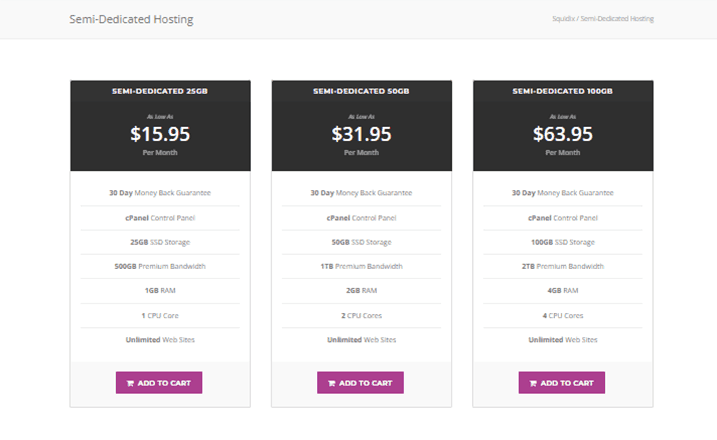
The alternative question is how to secure guaranteed server resources without paying the premium for a fully managed dedicated machine. Squidix answers this with their semi-dedicated hosting tiers. These plans are essentially shared hosting environments, but with a drastically reduced number of tenants on the server. By limiting the population, each account receives a significantly larger, guaranteed slice of the CPU and RAM. Ranging from the Dedicated 25GB plan at $15.95 per month to the Dedicated 100GB plan at $63.95 per month, these tiers offer a highly pragmatic financial compromise. You can scale from 1 CPU core and 1GB of RAM all the way up to 4 CPU cores and 4GB of RAM without ever leaving the shared architecture. You are paying for guaranteed resources without the management premium. For a growing business, jumping from a $4 monthly bill to a $16 or $31 monthly bill is a negligible expense if it means the website stops crashing during peak hours. It is a highly practical middle tier that allows a business to scale its infrastructure in direct proportion to its revenue, without taking on the financial risk of leasing an entire physical server before it is truly necessary.
Retaining the Familiar cPanel Environment
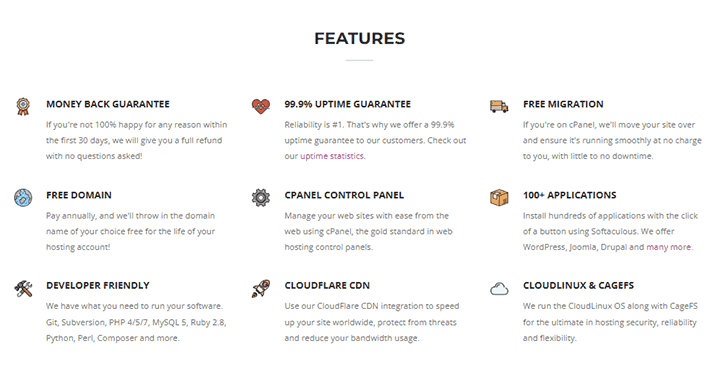
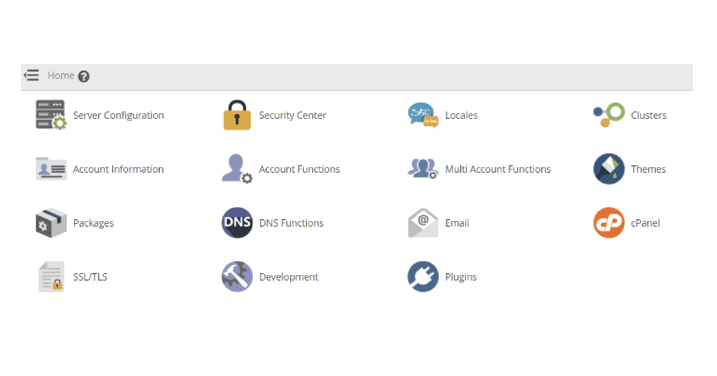
The true genius of the semi-dedicated approach is not just the hardware allocation; it is the preservation of the user interface. Friction usually appears the moment you try to move an existing, complex website to a new environment. A buyer does not want to spend their weekend troubleshooting database connection errors or reconfiguring email routing on a proprietary control panel. Squidix relies entirely on the industry-standard cPanel across these upgraded tiers. If you have managed a website at any point in the last decade, you already know exactly where to find your file manager, your PHP version selector, and your SSL certificate generator. There is zero learning curve here. Furthermore, they run the CloudLinux operating system along with CageFS. This setup ensures that even within the semi-dedicated environment, your account is securely isolated from the few other users on the server, preventing their traffic spikes from impacting your performance. To completely remove the onboarding anxiety, they offer free migration for existing cPanel accounts. Their team handles the heavy lifting of transferring files and ensuring the site runs smoothly on the new infrastructure, allowing the business owner to focus entirely on their operations rather than their server settings.
The Hardware Reality for Heavy Databases
Speed only becomes emotional when it fails. A buyer does not refresh a checkout page thinking about server specs; they worry about whether the cart will freeze at the wrong moment. For resource-heavy applications, the underlying hardware dictates the user experience. Squidix utilizes pure solid-state drives (SSD) across all of their servers. While SSDs are largely standard in the modern hosting market, their implementation in a semi-dedicated environment is crucial. When a membership site experiences a surge in concurrent logins, the database must execute hundreds of read/write requests simultaneously. Traditional hard drives, or even heavily throttled SSDs on crowded shared servers, will queue these requests, resulting in the dreaded backend slowdown. By combining pure SSD storage with the generous resource allocations of the semi-dedicated tiers, Squidix ensures that these database-heavy interactions remain fluid. The hardware is designed to keep dynamic content management systems running smoothly rather than trying to be everything to everyone. You are trading the infinite scalability of a massive cloud network for the highly stable, predictable reliability of a well-maintained, localized server.
Niche CMS Maintenance and the Value of Local Support
Software updates are the quiet terror of website management. A business owner clicks the “update now” button on their dashboard, holds their breath, and prays that a core file change does not trigger a fatal plugin conflict. For standard WordPress blogs, this process is usually smooth. But for complex, highly customized platforms, an update can easily break a critical function, taking the entire business offline. Compared with similar hosts that offer generic infrastructure and leave the software management entirely to the user, Squidix has carved out a specific niche by actively supporting the applications their clients use. The positioning is clearer when you realize that they do not just host the files; they take responsibility for the environment. When paired with their commitment to accessible, human support, this creates a safety net that is incredibly rare in the modern hosting industry.
The Joomla and Moodle Lifeline
Certain content management systems require a level of server tuning that generic hosts simply will not provide. Joomla installations, for example, are notorious for their significant memory, bandwidth, and storage requirements. Moodle, the popular open-source learning platform, demands intense database performance to handle simultaneous student quizzes and video uploads. If you try to run these on a standard, crowded shared server, your users will immediately experience slow load times, security warnings, and random database errors. Squidix differentiates itself by offering specialized hosting and maintenance plans specifically for these platforms. They have been a Joomla service provider for more than a decade, and their infrastructure is optimized for its exact quirks. More importantly, their maintenance plans include handling major and minor updates, installing extensions, and managing backups. Knowing that a professional is handling your core CMS updates turns a potentially site-breaking chore into a non-issue. As one user noted, “They are the only company that has been able to help me with Moodle effectively.” This is not just hosting; it is active technical partnership.
US-Based Phone Support When It Breaks
Reassurance is the only thing that matters when a website goes offline. A buyer does not care about a comprehensive knowledge base when their community portal is throwing errors; they need to know that a competent human is actively looking at the problem. In an era where getting a live person on the phone is increasingly rare, Squidix takes a refreshingly traditional approach. They provide 24/7 support staffed by US-based agents, accessible via both ticketing and direct phone lines. Hearing a real voice on the other end of the line instantly de-escalates the panic of a broken website. Because they specialize in complex CMS environments, these agents actually understand the unique database demands and plugin conflicts associated with your software. They are not just reading from a generic script or passing you to an AI chatbot; they are troubleshooting the actual application you rely on. Multiple quoted perceptions highlight this exact relief, with buyers stating, “Working with Squidix was like having my own data/web team.” For a small business that cannot afford a dedicated IT department, this caliber of specialized, reachable support is easily the strongest reason to choose this provider.
The Geographic Trade-Off of Indianapolis
However, every hosting decision involves a compromise. The alternative question is what happens if your traffic is truly global. Squidix operates out of an Indianapolis datacenter. If your audience is primarily in the US Midwest or North America, this localized infrastructure provides snappy, reliable response times. But because they do not publish a sprawling list of international datacenters, a buyer targeting users in Asia or Europe might experience noticeably higher latency than they would with a globally distributed cloud host. They do back their infrastructure with a standard 99.9% uptime guarantee, and they utilize Cloudflare CDN integration to help mitigate geographic distance, but the physical reality of a single primary location remains. You are trading global edge presence for regional predictability. For a local business, a regional school district using Moodle, or a North American veteran association using Joomla, this geographic limitation is entirely irrelevant. But for a truly international e-commerce brand, it is a hard physical constraint that must be factored into the buying decision.
Evaluating the Long-Term Commitment
The final hurdle in any hosting journey is the checkout cart, and specifically, the long-term financial reality of the contract. Squidix offers a highly appealing starting point, and they remove the immediate risk by providing an unconditional 30-day money-back guarantee. If you are not completely satisfied, you can walk away without a fight. They also run aggressive promotions, such as a 6-month free hosting offer that requires only a $1 authorization fee. However, the small risk is that the standard renewal rates for their plans are not transparently published in the primary catalog. A buyer knows exactly what they will pay today, but forecasting the three-year operational budget requires a direct conversation with their sales team. Despite this missing data point, the overall value remains incredibly strong when you factor in the included extras. Free migrations, included cPanel licenses, free inbound and outbound spam protection, and specialized CMS maintenance save you from the hidden fees that other hosts frequently tack onto the final bill. You are not being nickel-and-dimed for essential control panel access or basic support interactions. If you are comfortable confirming your renewal rate upfront, the pricing structure here offers a highly competitive way to secure reliable, US-based hosting that actually cares about your specific workload.
The Agency Angle: Reseller and Dedicated Infrastructure
While small business owners and niche educators form the core of the Squidix user base, there is an entirely different buyer profile that frequently evaluates independent hosts: the digital agency. When a web design firm or a freelance developer manages dozens of client sites, they cannot afford to place their reputation in the hands of an unreliable server. Compared with similar hosts that treat resellers as an afterthought, Squidix provides a structured path for agencies to scale their own hosting operations. The positioning is clearer when you look at how they handle the transition from a simple reseller account to a fully managed dedicated server. This is not just about buying server space; it is about securing a silent infrastructure partner that makes the agency look good to its own clients.
Building a Business on Reseller Hosting
The first step for many agencies is the reseller tier. This spin on shared hosting allows a developer to spawn individual hosting accounts for friends, family, or paying clients. The appeal here is straightforward: sell hosting without the overhead of managing the physical hardware. A buyer in this scenario is looking for absolute stability, because every time a server goes down, their own phone rings with angry clients. By utilizing the same CloudLinux and CageFS architecture found in their standard plans, Squidix ensures that one poorly optimized client site does not crash the entire reseller ecosystem. Furthermore, the inclusion of unlimited email boxes, forwarders, and auto-responders allows the agency to offer comprehensive packages to local businesses who still rely heavily on traditional email hosting. The useful part is the invisibility. The agency gets to brand the cPanel experience, while Squidix handles the underlying security patches and offsite backups. It is a low-risk way to build recurring revenue, backed by the reassurance that US-based support is available if a complex migration goes sideways.
The Leap to Managed Dedicated Servers
Eventually, a successful agency or a massive enterprise application will outgrow even the most robust semi-dedicated or reseller environment. When you need complete control over the hosting environment, from the hardware to the software, the only logical step is a dedicated physical machine. Squidix offers managed dedicated servers starting at $174.95 per month. The alternative question is why a buyer would choose an independent host in Indianapolis over a bare-metal instance from a massive cloud provider. The answer lies entirely in the word “managed.” Leasing a bare-metal server from a global tech giant means you are entirely responsible for the operating system, the security firewalls, and the software updates. If the server is compromised, you are on your own. Squidix removes this terrifying burden by providing fully managed dedicated servers. Their team handles the server maintenance, the security monitoring, and the hardware replacements. You gain the raw power of a dedicated physical machine without needing to hire a full-time system administrator to keep it running.
Tailoring the Hardware to the Client
When evaluating these high-end tiers, the specific hardware allocations become the primary decision criteria. While the exact CPU and RAM specifications for the dedicated servers require a custom quote based on the client’s needs, the foundational commitment to pure SSD storage and premium bandwidth remains constant. For an agency hosting a portfolio of high-traffic WooCommerce stores or a media-heavy digital magazine, this dedicated throughput is non-negotiable. The ability to utilize the ultra-secure SSH protocol for terminal access gives developers the control they crave, while the managed support net ensures that a mistaken command does not result in permanent data loss. This is where the “data/web team” perception truly shines. An agency can confidently pitch enterprise-level hosting to their clients, knowing that they have a dedicated team in Indianapolis ready to assist with complex server configurations or emergency restorations.
The Verdict on Agency Scaling
Ultimately, the decision to use Squidix for reseller or dedicated hosting comes down to the value you place on human support versus raw, unmanaged compute power. If your agency model relies on deploying hundreds of automated, containerized microservices across a global edge network, this traditional, managed approach will feel misaligned. But if your business model is built on providing high-touch, reliable service to local businesses, law firms, or medical practices, having a hosting partner that shares that exact philosophy is invaluable. The lack of transparent renewal pricing on the lower tiers is less of an issue here, as dedicated server contracts are typically negotiated directly, allowing for clear, long-term financial planning. By offering a seamless upgrade path from a basic reseller account to a fully managed dedicated machine, Squidix proves that they are capable of supporting a business from its first client to its hundredth. They provide the quiet, competent infrastructure that allows an agency to focus on design and marketing, rather than server uptime.