

Is HawkHost the Right Fit for Your Website?

The sinking feeling of a website going dark is something every online business owner fears. You refresh the page, check your internet connection, and finally realize the truth: your server has crashed. In that moment of panic, you do not care about technical jargon or marketing promises; you care about whether your support ticket will be answered by a human and whether your data is safe. The reassurance comes from choosing a partner that understands this vulnerability. When something breaks, the difference between a minor hiccup and a business-ending disaster lies entirely in the infrastructure and the support team backing your account. This is the lens through which we must evaluate HawkHost, a provider that has been quietly operating since 2004, carving out a niche as a budget-friendly yet reliable hosting option.
Many buyers approach HawkHost with a mix of hope and hesitation. On one hand, the promise of a “cheap hosting” starting rate is highly appealing, especially for startups and small projects trying to keep overhead low. On the other hand, experienced webmasters know that low prices often come with hidden compromises—congested servers, slow response times, and support queues that feel like talking to a brick wall. In this detailed analysis, we will look past the promotional banners to examine the real-world performance, the physical security of their global network, and the exact trade-offs you make when choosing their shared, reseller, or self-managed virtual private servers. Our goal is to help you decide whether you can confidently host your projects here, or if you should slow down and look elsewhere.
We will structure our investigation around three core promises: first, we will analyze the stability of their physical network across their seven global datacenters; second, we will dissect the management overhead of their self-managed cloud compute instances; and finally, we will evaluate the long-term cost structure, comparing their promotional rates with the reality of renewal pricing. By examining these areas, we aim to give you a clear picture of what it feels like to host your business with HawkHost in 2026.

Why Uptime Anxiety Drives the Search for Better Infrastructure
Uptime is not just a metric on a status page; it is the lifeblood of your digital presence. When a visitor clicks your link from a social media post or a search engine, they expect an instantaneous response. If they encounter a timeout error, they will rarely try again; instead, they will click away to a competitor. This is why the physical infrastructure of your host matters far more than any software feature. The reassurance comes from knowing that your files are stored on hardware designed to withstand both physical and digital disruptions. HawkHost addresses this fundamental anxiety by deploying its services across a global network of seven strategically located datacenters, including facilities in Dallas, Los Angeles, New York City, Toronto, London, Singapore, and Hong Kong. This geographic diversity allows you to place your website physically close to your target audience, reducing the distance data must travel and minimizing latency.
Consider the scenario of a local business owner in Singapore trying to serve customers in Southeast Asia. If their website is hosted on a server in New York, every page load must travel across the ocean, adding hundreds of milliseconds of delay. By selecting the Singapore datacenter, the owner ensures that local visitors experience a snappy, responsive site. HawkHost’s network is built on a Juniper enterprise-grade backbone, with network providers like NTT, PCCW, and Telia in Singapore, and Zayo, Level3, and HE.NET in New York. This high-quality routing helps prevent packet loss and ensures that traffic flows smoothly even during peak hours. The servers themselves are connected via 40Gbps network ports, which provides ample bandwidth to handle sudden traffic spikes without bottlenecking your site’s performance.
To understand the value of this infrastructure, we can look at a real-world example from a website owner named Sarah. Sarah, a professional photographer, experienced a sudden surge of traffic when one of her pictures went viral on Facebook. Her old hosting provider, unable to handle the load, took her site offline and essentially told her to “get lost” when she asked for help. Desperate to keep her business online, she turned to HawkHost. Their support team walked her through the migration process and had her site up and running again in hours, handling the traffic surge without further issues. This story highlights a common truth in the hosting industry: speed and reliability only become emotional when they fail. A buyer does not think about server specifications when their site is running smoothly; they only care when a crash threatens their livelihood.
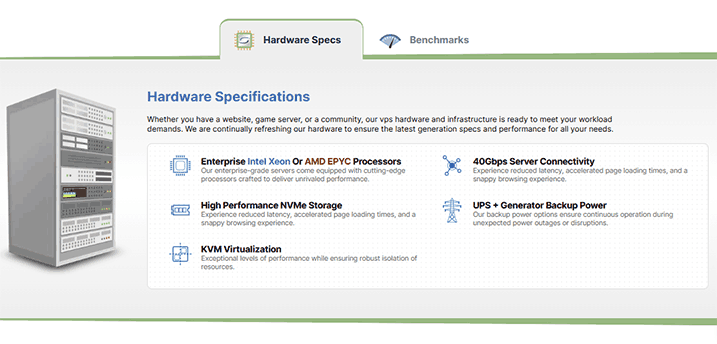
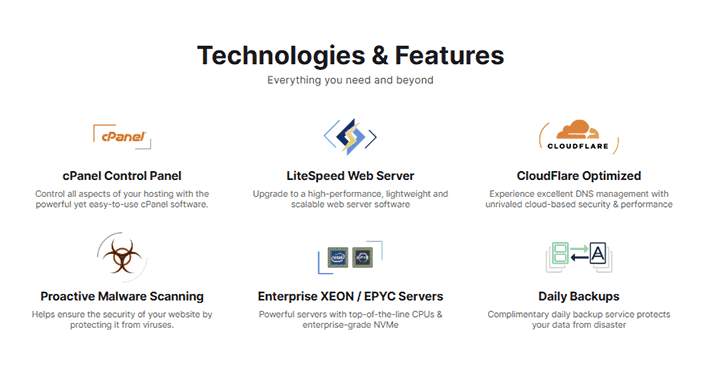
HawkHost’s reliance on StorPool’s distributed storage architecture is another key factor in their reliability. Traditional hosting setups store your website’s files on a single hard drive inside a single server. If that drive fails, your site goes down. StorPool distributed storage pools resources across multiple physical servers, mirroring your data across different nodes. If a drive fails, the system instantly routes traffic to another copy of your data, keeping your site online. This redundancy is combined with enterprise-grade Intel Xeon or AMD EPYC processors and high-performance NVMe storage drives, ensuring that your database queries and page loads remain fast and stable. By investing in these backend technologies, HawkHost provides a level of hardware reliability that is rare in the budget hosting space.
Finally, we must look at the Service Level Agreement (SLA) that backs this infrastructure. HawkHost promises a 99.9% uptime guarantee, which is fully backed by their SLA. If their network or hardware fails to meet this standard in any given month, you are entitled to receive hosting credits. While a credit does not recover lost sales or repair a damaged reputation, it shows that the provider is willing to stand behind their service with financial penalties. The reassurance comes from knowing that the host has a direct financial incentive to keep their servers online and running smoothly. For business owners who cannot afford to have their sites go dark, this SLA provides an important layer of security and peace of mind.
The Physical Safeguards Protecting Your Data
A server is only as reliable as the building that houses it. A power grid failure or a cooling malfunction can take down thousands of websites instantly if a datacenter lacks proper redundancy. HawkHost utilizes facilities that feature robust physical security and environmental controls. For example, their Dallas facility operates with a Tier 3 design, offering true 2N power redundancy and connectivity from multiple Tier 1 carriers. This means that even if the primary utility power grid fails, backup systems are ready to keep the hardware running. The facility is equipped with biometric access controls, digital video surveillance, and pre-action dry pipe fire suppression systems to protect the physical servers from damage. Similar standards are maintained across their other locations, such as the New York City facility, which boasts N+2 feeder capacity and 72MW of backup emergency generator power. Knowing that your site is hosted in a secure, enterprise-grade environment turns a simple hosting plan into a secure foundation for your business.
Furthermore, the environmental controls in these facilities are designed to handle extreme weather conditions. The Toronto facility, for instance, features N+1 cooling infrastructure and backup generators to ensure continuous operation during harsh Canadian winters. In London, the datacenter boasts ISO27001 and BS 25999-2:2007 certifications, reflecting international standards for information security and business continuity. These certifications are not just badges; they represent rigorous, independent audits of the facility’s operational procedures and security protocols. For buyers who host sensitive client data or e-commerce platforms, these physical safeguards provide the confidence that their hosting environment is built to withstand unexpected external disruptions.
SLA Guarantees vs. Real-World Recovery Times
While an SLA guarantee is a valuable commitment, the real test of a provider is how quickly they recover from an actual incident. When a server crash occurs, the speed of the technical team’s response determines whether your site is offline for minutes or hours. HawkHost maintains a public server status page where they post real-time updates about maintenance, network status, and active incidents. This transparency is crucial for building trust with users. Instead of hiding outages behind generic error pages, HawkHost provides clear information about what went wrong and when a resolution is expected. This open communication helps reduce the anxiety of downtime, allowing you to keep your own clients informed during an incident.
It is also worth noting that HawkHost’s support team is available 24/7/365 to assist with recovery efforts. If your site goes down due to a server-side issue, you do not have to wait for business hours to get help. Their technicians are constantly monitoring the network and are often already working on a fix before you even open a ticket. This proactive approach to monitoring and incident response is a key reason why HawkHost has maintained a strong reputation for reliability over the past two decades. For buyers who want a host that takes uptime seriously, the combination of a contractually backed SLA, transparent status reporting, and round-the-clock technical support makes HawkHost a highly dependable choice.
Navigating the Trade-offs of Self-Managed Cloud Environments
As your website grows and attracts more traffic, you may find that shared hosting no longer provides the resources or the isolation your applications need. Moving to a Virtual Private Server (VPS) is the logical next step, but it introduces a new set of anxieties. Many buyers do not realize that managing a VPS requires a high level of technical expertise. When you purchase a cloud compute instance, you are often handed a clean operating system installation and root access, leaving you entirely responsible for security, software updates, and server configuration. HawkHost’s Cloud VPS plans are strictly self-managed. This means that while they guarantee the underlying hardware and network connectivity remain online, their support team will not help you install software, configure firewalls, or debug application errors. If you are comfortable managing a Linux server via SSH, this setup offers complete freedom; however, if you prefer a hands-off experience, the transition can feel overwhelming.
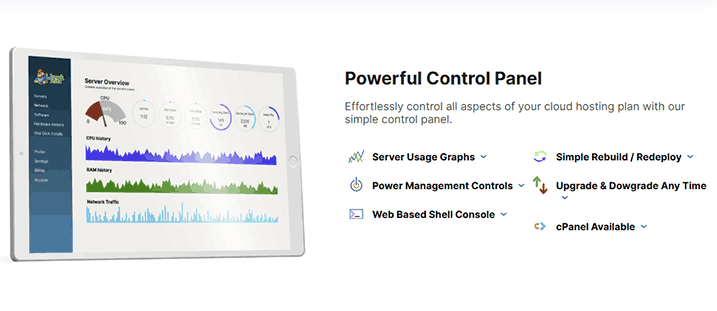
When something breaks on a self-managed server, the burden of fixing it falls entirely on you. Imagine logging in to your server via SSH to update a package, only for the terminal to hang and the server to become completely unresponsive. Without a managed support team to bail you out, you must use the web-based HTML5 shell console to log in and troubleshoot the boot sequence or check system logs. HawkHost does provide basic power management controls through their portal, allowing you to start, stop, or reboot your instance with a single click, as well as view server usage graphs to monitor CPU and memory consumption. However, if your web server crashes due to a configuration error, you must diagnose and fix the issue yourself. For developers and system administrators, this level of control is ideal, but business owners who lack technical staff should consider whether they have the time and knowledge to manage their own server infrastructure.
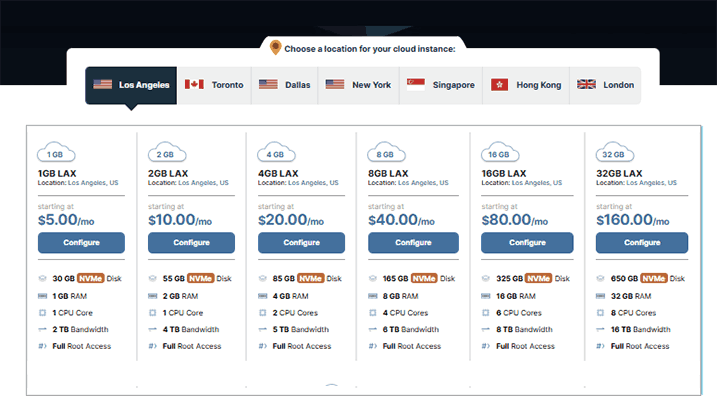
Despite the management overhead, HawkHost’s Cloud VPS plans offer exceptional value for developers. Their entry-level Cloud VPS plan starts at just $5.00 per month for 1GB of RAM, 30GB of NVMe storage, 1 CPU core, and 2TB of bandwidth. When compared to similar entry-level instances from major cloud providers—such as Google e2.micro at $6.11, Microsoft B1s at $7.59, Amazon t2.micro at $8.47, or Oracle E3.Flex at $21.00—HawkHost provides significantly more resources for the price. This makes their VPS line highly attractive for developers who want cheap “sandbox” environments or lightweight production servers without the premium cloud markup. You can choose from popular Linux distributions, including AlmaLinux 8, 9, or 10, and Rocky Linux 8, 9, or 10, giving you a modern, stable foundation for your applications.
For entrepreneurs looking to start their own web hosting business, reseller hosting offers an easy entry point. HawkHost’s reseller plans allow you to purchase a large block of resources and divide it into smaller accounts to sell to your clients. This is a fully white-label solution, meaning your clients will see your brand name, not HawkHost’s. However, running a successful reseller business requires automated billing and client management software. A common disappointment for new resellers is discovering that HawkHost does not include a WHMCS license with their plans. WHMCS is the industry standard for hosting automation, and purchasing a separate license adds to your monthly overhead, especially when you are just starting out and have only a few clients. Additionally, while HawkHost provides 24/7 support for your reseller account, they will not provide support directly to your clients. You must act as the first line of support for any issues your customers encounter, which can be a significant time commitment as your client base expands.
Ultimately, the choice between shared, reseller, and VPS hosting comes down to your technical comfort level and the amount of time you are willing to spend managing your server. HawkHost provides the tools and the raw performance you need to succeed, but they expect you to bring the expertise. By understanding these trade-offs before you sign up, you can avoid the frustration of buying a service that you do not have the skills to manage, ensuring a smoother and more successful hosting experience.
The Hidden Burden of Root Access Control
Root access is the ultimate administrative privilege on a Linux server. It grants you the power to modify any file, install any software package, and configure the system exactly as you see fit. However, this absolute control also means there are no safety nets. A simple typo in a configuration file or an accidental deletion of a system directory can render your server completely unbootable. A single typo can break everything. On a managed hosting plan, a support technician would step in to resolve these issues for you. On a self-managed HawkHost VPS, you are on your own. You must be comfortable troubleshooting boot failures, configuring network interfaces, and managing system services via the command line. If you do not have experience with Linux system administration, the learning curve can be steep and stressful.
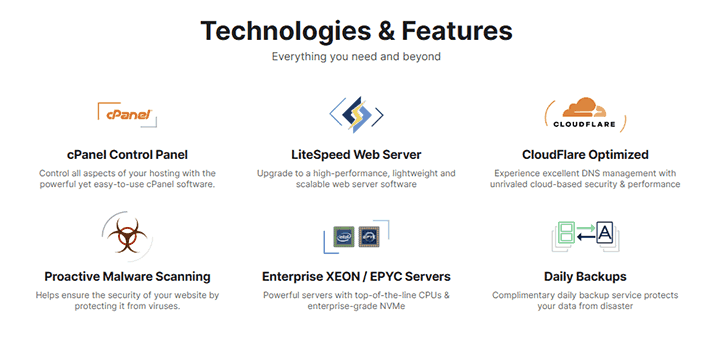
Security is another critical responsibility that comes with root access. When you manage your own server, you must actively protect it from brute-force attacks, malware, and software vulnerabilities. This involves setting up firewalls, configuring SSH key authentication, disabling root login over SSH, and regularly applying security patches to your operating system and applications. While HawkHost bundles CloudLinux and Imunify360 with some of their specialized VPS plans to help automate security, the ultimate responsibility for keeping the server secure still rests with you. If your server is compromised due to a weak password or an unpatched vulnerability, you must clean the infection and secure the system yourself. For buyers who want a “set-and-forget” hosting solution, the administrative burden of root access control is a significant trade-off to consider.
Reseller Realities Without Bundled Billing Software
Reseller hosting is often marketed as a “turnkey” business opportunity. The idea is simple: you buy a reseller plan, create custom hosting packages, and sell them to your own clients for a profit. However, managing a reseller business involves much more than just creating accounts in cPanel. You must handle billing, domain registrations, support tickets, and client communications. To automate these tasks, most resellers rely on WHMCS, an all-in-one billing and support platform designed specifically for the hosting industry. Because HawkHost does not include a WHMCS license with their reseller plans, you must purchase a license directly from WHMCS or find an alternative billing solution. This added cost can significantly impact your profit margins, especially when you are just starting out and have only a few clients.
In addition to billing software, you must also consider the support burden of running a reseller business. HawkHost’s support team is available 24/7 to help you with any issues related to your reseller account or the physical server. However, they will not interact with your clients. If one of your customers has trouble setting up their email or encounters a database error, they will contact you for help. You must diagnose the issue and provide a solution. If the problem is server-side, you can open a ticket with HawkHost on behalf of your client, but you must act as the intermediary. This means you must have a solid understanding of web hosting and cPanel to effectively support your customers, and you must be prepared to handle support requests at all hours of the day and night.