Web Hosting Value Guide: Beyond the First Price Tag Web Hosting Promo Codes
The first bill is only part of the pricing story. Many website owners begin their journey by selecting the most affordable hosting plan, often prioritizing low entry-level costs over long-term operational stability. While this approach minimizes immediate out-of-pocket expenses, it frequently leads to hidden costs and performance bottlenecks as a site matures. True value in web hosting is not found in the initial discount, but in the provider’s ability to maintain uptime, secure data, and scale resources without forced, disruptive upgrades.
Choosing a host requires looking past marketing headlines to evaluate the underlying architecture. Whether a business is launching a simple blog or managing a complex e-commerce platform, the quality of technical support, the robustness of disaster recovery protocols, and the flexibility of the infrastructure are what ultimately determine the cost of ownership. Value changes when your site grows beyond basic requirements, shifting the focus from simple server space to the reliability of the partnership between the business and the provider. This guide examines the critical factors that separate temporary savings from sustainable, high-performance hosting environments.
The First Bill Is Only Part of the Pricing Story
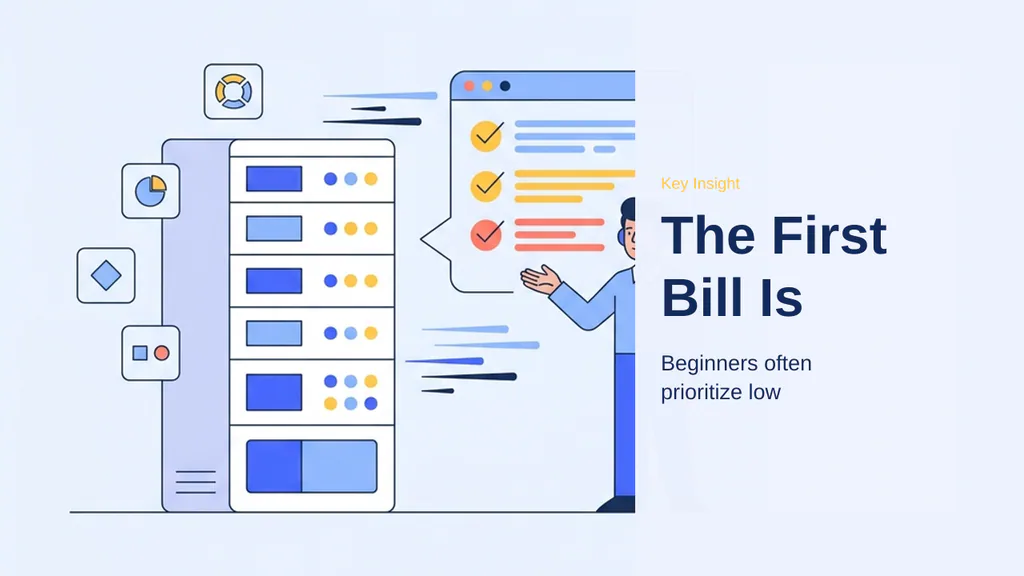
Beginners often prioritize low cost, but reliability, support, and future scalability provide better long-term value. Choosing the cheapest plan available can lead to hidden costs, performance bottlenecks, and inadequate support when your site encounters its first real traffic surge. A fair price should still make sense after the first pleasant number fades.
Key considerations for The First Bill Is Only Part of the Pricing Story
When selecting your first hosting plan, look beyond the initial promotional rate. Stable performance and high uptime are the foundations of a successful online presence. Essential security features like free SSL, automatic backups, and DDoS protection are non-negotiable for new websites. Prioritize providers that offer responsive technical support, as the difference between a minor incident and a major outage often depends on how quickly your host responds to your needs.
- Focus on reliability and ease of use rather than the lowest entry-level price.
- Verify that the provider offers clear paths for future resource upgrades.
- Ensure essential security features are included by default.
- Test the responsiveness of technical support before committing to a long-term contract.
Practical checks for The First Bill Is Only Part of the Pricing Story
Before finalizing your choice, audit the provider’s renewal terms and resource limits. Many hosts use low introductory pricing to attract users, only to apply significant price hikes upon renewal. Additionally, check for inode limits, backup retention policies, and whether the control panel is intuitive enough for your current skill level. A hosting provider should feel like a partner that supports your growth, not a bottleneck that forces you into expensive, unplanned migrations.
- Review the renewal pricing to avoid unexpected budget shocks.
- Check for limitations on inodes or database sizes that could restrict growth.
- Confirm the frequency and accessibility of automated backups.
- Evaluate the ease of scaling CPU, RAM, or storage resources.
Scalability and Traffic Management Realities

Scalability in web hosting refers to the ability to increase resources such as CPU, RAM, bandwidth, or storage as a website grows over time. This capability allows sites to maintain stable performance without requiring a complete infrastructure migration. Understanding how your provider manages these resources is essential for long-term planning, as growth often introduces technical bottlenecks that basic plans cannot resolve.
Dynamic vs Static Traffic Handling
Traffic spikes are handled in layers: edge caching absorbs repeat page views, a CDN reduces distance and filters bad traffic, load balancing distributes demand, and the origin server handles everything that cannot be cached. The critical issue is that most traditional hosting providers survive surges by leaning heavily on front-end caching. That works when visitors are anonymously browsing static pages. It does not work nearly as well when the spike is commercial or interactive.
The real stress test starts when users log in, search, filter products, add items to a WooCommerce cart, update checkout details, or access personalized account pages. These requests are dynamic and typically bypass cache, going straight to PHP, the database, and the origin CPU. This is where many hosting environments expose their limits. Artificial PHP worker caps, slow database response, and reactive scaling can create queues long before a site appears “down.”
- Audit heavy plugins and clean up database bloat regularly.
- Use object caching where appropriate to reduce database load.
- Test real revenue paths, not just the homepage, before major campaigns.
- Understand your host’s commercial terms regarding resource limits.
- Monitor server-side metrics to identify early signs of throttling.
The Hidden Cost of Traffic Spikes
Many providers treat traffic spikes as an upsell moment through forced plan upgrades, bandwidth limits, worker restrictions, or overage charges. A successful traffic spike should mean more conversions, not a surprise bill or a broken checkout. If your host relies on artificial PHP worker ceilings, you may experience slow checkouts, failed carts, or 502/504 errors at the exact moment demand is highest. Choosing a partner that prioritizes optimized MariaDB performance and no metered bandwidth is a direct way to protect your return on investment.
Beyond the immediate technical hurdles, the financial structure of your hosting plan often dictates how you manage growth. Many providers utilize fixed-cost models for entry-level tiers, which provide predictable monthly expenses for businesses with stable, static traffic. However, these plans often hit a hard ceiling when your marketing efforts succeed, forcing a transition to more expensive, high-resource tiers. This reactive scaling can lead to significant budget fluctuations that are difficult to forecast during the planning stages of a campaign.
Conversely, cloud-based infrastructure introduces a more dynamic cost structure that aligns with actual consumption. While this offers the flexibility to handle sudden traffic surges without manual intervention, it requires a clear understanding of your resource usage patterns to avoid unexpected billing. The choice between these models involves evaluating the cost of potential downtime against the cost of infrastructure flexibility. If your business relies on seasonal traffic spikes, the ability to scale resources on demand is often worth the premium compared to the rigid limits of traditional shared hosting environments.
Ultimately, the most effective strategy is to align your hosting architecture with your business lifecycle. Early-stage projects benefit from the simplicity and cost-predictability of traditional hosting, while established platforms with high-growth trajectories require the elastic nature of cloud-native systems. By auditing your current resource consumption and projecting future traffic, you can select a partner that provides the necessary headroom without forcing you into premature or unnecessary upgrades. A host that offers transparent scaling paths—rather than hidden overage fees—is a critical partner in maintaining long-term profitability and site stability.
Infrastructure Resilience and Business Continuity
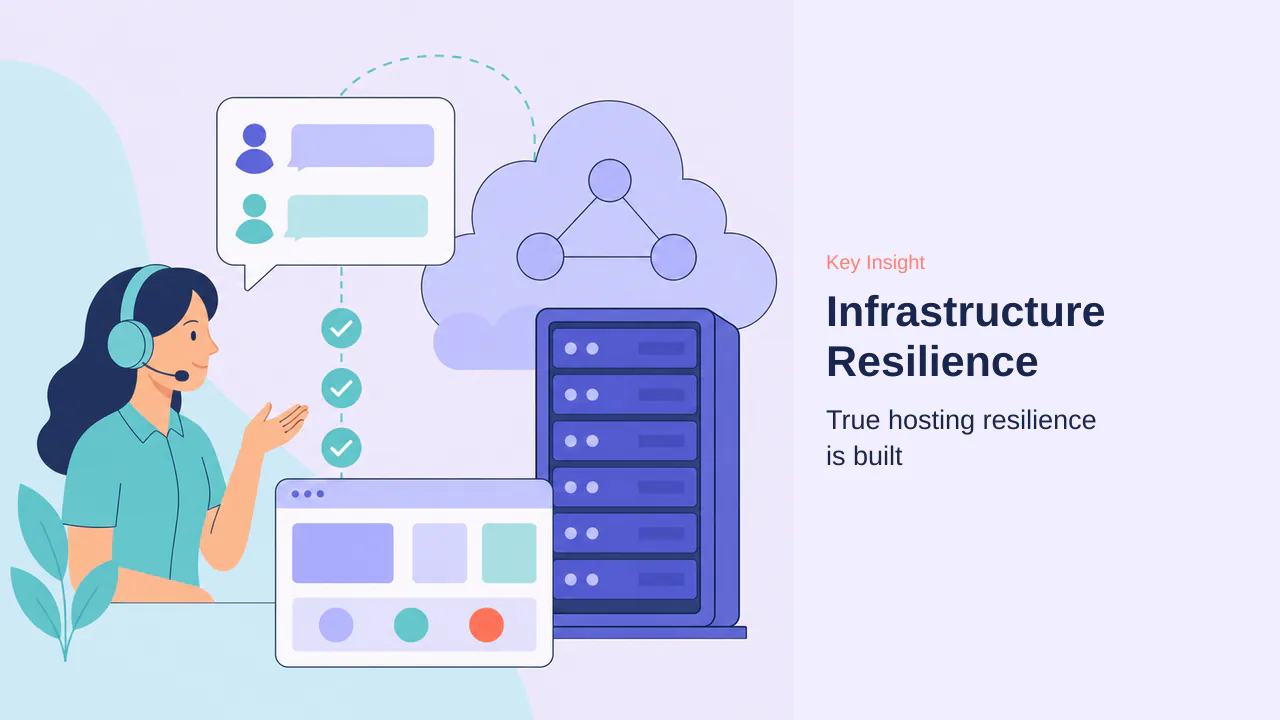
True hosting resilience is built into the architecture, not just reactive support. People often expect resilience to come from one specific technology, but in reality it is the result of how the entire hosting environment is designed. Backups, monitoring, security, resource allocation, server stability, and update practices all matter. But the most important part is that these things work together before something goes wrong. A hosting service should not rely only on support reacting after a failure. It should be built in a way that reduces the chance of failure in the first place.
Of course, support is important when something unexpected happens. No provider can honestly say that incidents will never occur. But if a customer needs to contact support at 3AM because their website is constantly down, that’s not a strong support story, that is usually a sign that the foundation is not strong enough. For many, good hosting is the kind you do not have to think about every day. Your website loads, your email works, your customers can reach you, and the business keeps moving.
Resilience is not only about how fast someone responds during an incident. It’s about how well the infrastructure, monitoring, backups, and security reduce the impact before it becomes a serious problem. At JetHost, we see resilience as a balance between technology, prevention, and responsibility. Human support matters, but the real goal is to provide a hosting environment stable enough that customers can focus on their business instead of constantly worrying about what might break.
- Proactive monitoring to identify bottlenecks before they trigger outages.
- Automated, frequent backups with verified restoration procedures.
- Redundant infrastructure to ensure service continuity during hardware failures.
- Integrated security layers that filter malicious traffic at the platform level.
- Resource isolation to prevent neighbor-induced performance degradation.
Reliability is a design choice, not an afterthought. When evaluating a provider, look for evidence of these preventative measures rather than just promises of 24/7 support. A robust foundation minimizes the need for emergency intervention, allowing your business to operate with confidence regardless of external traffic fluctuations or minor technical hiccups.
Beyond the immediate technical setup, business continuity relies on the strategic alignment of hosting resources with operational goals. A resilient infrastructure acts as a silent partner, absorbing minor technical fluctuations that would otherwise demand manual intervention. When a hosting environment is architected for stability, it minimizes the frequency of emergency support tickets, allowing internal teams to focus on revenue-generating activities rather than troubleshooting server-level anomalies.
The transition from a reactive posture to a proactive one involves evaluating how a provider manages the lifecycle of your data. This includes not just the existence of backups, but the verification of those backups through regular, automated restoration tests. Without verified recovery paths, the promise of data protection remains theoretical. A truly resilient host treats the restoration process as a core service component, ensuring that in the event of a catastrophic failure, the path to normalcy is both documented and practiced.
Furthermore, resilience extends to the security perimeter. By filtering malicious traffic at the platform level, a host prevents resource exhaustion caused by automated bots and brute-force attempts. This layer of defense is essential for maintaining consistent performance, as it ensures that server CPU and memory remain available for legitimate user requests. When security is integrated into the infrastructure, it creates a more predictable environment where traffic spikes are handled by design rather than by emergency manual scaling.
- Platform-level traffic filtering to neutralize automated threats before they impact resources.
- Strategic resource isolation to ensure consistent performance during high-demand periods.
- Proactive infrastructure updates that maintain compatibility without requiring manual code adjustments.
Value changes when you move from self-service to managed partnerships. The pricing question is whether your infrastructure matches your growth trajectory.
- Platform-level traffic filtering to neutralize automated threats before they impact resources.
- Strategic resource isolation to ensure consistent performance during high-demand periods.
- Proactive infrastructure updates that maintain compatibility without requiring manual code adjustments.
Specialized Full-Service vs Large Providers
Large providers offer solid infrastructure at competitive prices, and many businesses run perfectly fine on them, including larger ones. The model is self-service by design: you get the tools, the platform, and the documentation. What you do with it is up to you. That works well if you have the time and interest to manage it, or if you’re already working with an agency that handles the technical side for you.
The Self-Service Model
In a self-service environment, the hosting provider supplies the raw infrastructure, such as server space, databases, and control panel access. The responsibility for configuration, security updates, and performance tuning rests entirely with the website owner. This model requires significant technical oversight to ensure the environment remains optimized and secure as the site evolves.
While cost-effective, the self-service model can lead to hidden operational costs. For example, when PHP 8.x became the new standard, many large hosting customers suddenly found themselves paying extra every month just to keep running their old PHP version, often for years. What nobody told them: their website would have been compatible with the newer version all along. It just needed someone to check, explain, and if necessary, make a small adjustment to the code.
Full-Service Partnership Benefits
A specialized full-service provider follows an entirely different model. The idea is simple: you focus on your core business, and someone else takes care of the technical side – hosting, mail, website, and everything that comes with it. This approach shifts the burden of maintenance from the business owner to the hosting partner, who proactively manages the environment.
Full-service providers act as an extension of your team, handling setup, configuration, updates, and technical questions before issues escalate. Instead of navigating endless support ticket loops or receiving generic copy-paste responses, you work with a partner who understands your business requirements. This partnership model is not about infrastructure quality alone; it is about ensuring that your hosting environment is actively maintained to support your specific business goals.
Note: Choosing between these models depends on your internal capacity; if you lack the time or expertise to manage server-side updates, a full-service partner often provides better long-term value than a low-cost, self-service platform.
Beyond the immediate technical support, the value proposition of a specialized partner often includes proactive infrastructure monitoring that anticipates bottlenecks before they impact the end user. While large providers focus on maintaining the platform’s uptime, a full-service partner focuses on the health of the specific applications running on that platform. This distinction is particularly relevant for businesses that rely on complex database interactions or high-frequency updates, where generic server-level monitoring may fail to detect application-specific performance degradation.
Furthermore, the cost structure in a partnership model is often more predictable. Instead of navigating tiered pricing where every additional feature or resource bump requires a manual upgrade, specialized providers often bundle essential services into a single, transparent fee. This approach removes the administrative overhead of managing multiple service add-ons and ensures that the hosting environment remains aligned with the business’s actual operational needs rather than arbitrary plan limits.
Overlooked Factors in Hosting Selection

Many businesses focus heavily on storage space, bandwidth, or monthly pricing when selecting a hosting provider. However, the most overlooked factors are often the ones that have the greatest long-term impact on business continuity. The first factor is the quality and responsiveness of technical support. Even the best infrastructure can experience issues, and the difference between a minor incident and a major outage often depends on how quickly the hosting provider responds.
The second factor is the provider’s backup and disaster recovery strategy. Businesses should understand how frequently backups are performed, how long they are retained, and how quickly services can be restored if something goes wrong. Another commonly overlooked area is infrastructure quality. Enterprise-grade hardware, redundant power systems, reliable networking, and proactive monitoring contribute significantly to uptime and performance.
Finally, businesses should evaluate scalability. A hosting provider should be able to support future growth without requiring complex migrations or prolonged downtime. Long-term satisfaction depends far more on performance, support quality, and ease of scaling than on obtaining the lowest initial price. For most businesses, a provider that offers reliable uptime, transparent policies, and responsive support represents a much better investment than one that competes primarily on low-cost plans.
In our experience managing over 500 websites since 2014 and providing dedicated hosting services since 2019, we’ve found that choosing a hosting provider based solely on advertised price often leads to problems down the road. The right hosting solution depends heavily on the website’s purpose. While many business websites prioritize email reliability, speed, security, and dependable automated backups, eCommerce websites require additional attention to scalability and consistent performance during traffic spikes. A hosting provider should also offer transparent pricing and clearly communicate any limitations that may affect growth.
One of the most overlooked factors is support quality. Technical issues are inevitable, and responsive support can make the difference between a minor inconvenience and prolonged downtime. We also encourage website owners to look beyond storage and bandwidth figures and understand restrictions such as inode limits, renewal pricing, backup policies, and resource allocations. Ultimately, the best hosting provider is not necessarily the cheapest one, but the one that delivers the right balance of reliability, performance, security, support, and long-term scalability.
Preparing for Redesigns and Migrations
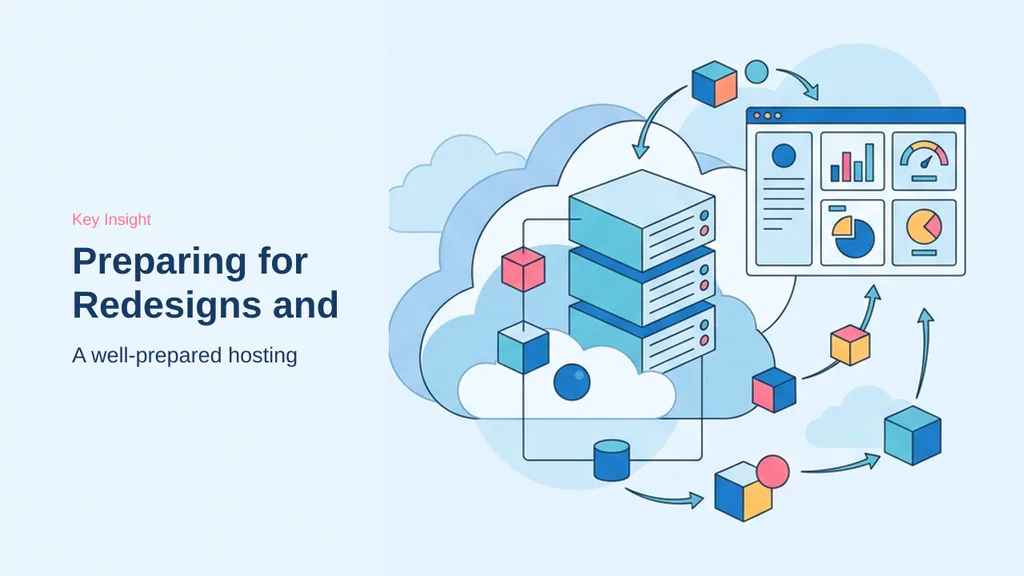
Before any major website redesign or migration, businesses should ensure their hosting environment is fully prepared to support a smooth transition. The most important steps include creating complete backups, reviewing server resources, verifying software compatibility, and testing the new website in a staging environment before deployment. Businesses should also confirm that SSL certificates, DNS configurations, email services, and third-party integrations are functioning correctly. Performance and security checks should be completed in advance to identify potential issues before launch.
Pre-Launch Checklist
In addition, organizations should review database performance, storage capacity, and bandwidth limits to ensure the hosting environment can handle expected traffic levels after the redesign or migration. Website owners should coordinate with developers, hosting providers, and other stakeholders to create a clear migration timeline and minimise disruptions. Monitoring tools should be configured before launch to track up-time, page speed, server performance, and user activity. Businesses should also test website functionality across different devices, browsers, and operating systems to ensure a consistent user experience. Search engine optimisation elements, including redirects, metadata, and URL structures, should be reviewed carefully to prevent ranking losses and broken links.
- Perform a full site backup before any changes.
- Verify software and plugin compatibility with the new environment.
- Test all functionality in a dedicated staging area.
- Audit DNS, SSL, and third-party API integrations.
- Establish a clear rollback plan for immediate restoration.
Minimizing Downtime Risks
A well-prepared hosting environment minimises downtime, reduces risk, and helps ensure that users and search engines experience a seamless transition. Careful planning, thorough testing, proactive monitoring, and effective communication are essential for a successful website redesign or migration, helping businesses maintain performance, security, and customer satisfaction throughout the process. It is also important to establish a rollback plan so that the previous version of the website can be restored quickly if unexpected problems occur. Testing real revenue paths is critical, as a cached homepage can score well while the cart, checkout, and search experience collapse under load.
Important: Always verify that your hosting provider supports two-way synchronisation for staging environments, as this allows you to push changes live with minimal friction while maintaining a safety net.
Beyond the technical mechanics of a migration, the financial and operational impact of downtime often outweighs the initial cost of a premium hosting environment. A well-structured migration plan should account for the potential loss of revenue during the transition period, especially for eCommerce operations where every minute of inactivity translates to abandoned carts and lost customer trust. It is essential to conduct a full audit of all active integrations, including payment gateways, third-party logistics APIs, and marketing automation tools, as these often require re-authentication or updated credentials in a new hosting environment.
Furthermore, businesses should treat the migration as an opportunity to clean up legacy data and optimize database structures. Removing unused plugins, purging outdated media files, and optimizing database tables before the move can significantly reduce the size of the migration package, leading to faster transfer times and a leaner production environment. This proactive approach not only minimizes the risk of data corruption during the transfer but also ensures that the new hosting environment starts with a clean, high-performance foundation. Coordinating these steps with your hosting provider’s support team can also reveal specific platform-level optimizations that might be available, such as server-side caching adjustments or specialized migration tools that simplify the process.
Finally, consider the timing of your migration. Scheduling the transition during periods of historically low traffic minimizes the impact of any unforeseen issues. Always ensure that the final DNS cutover is performed during a window where technical staff are available to monitor the site’s health and respond immediately to any anomalies. By treating the migration as a strategic business project rather than just a technical task, you ensure that the transition supports long-term growth rather than creating immediate operational friction.
Managed WordPress Hosting vs Shared Hosting
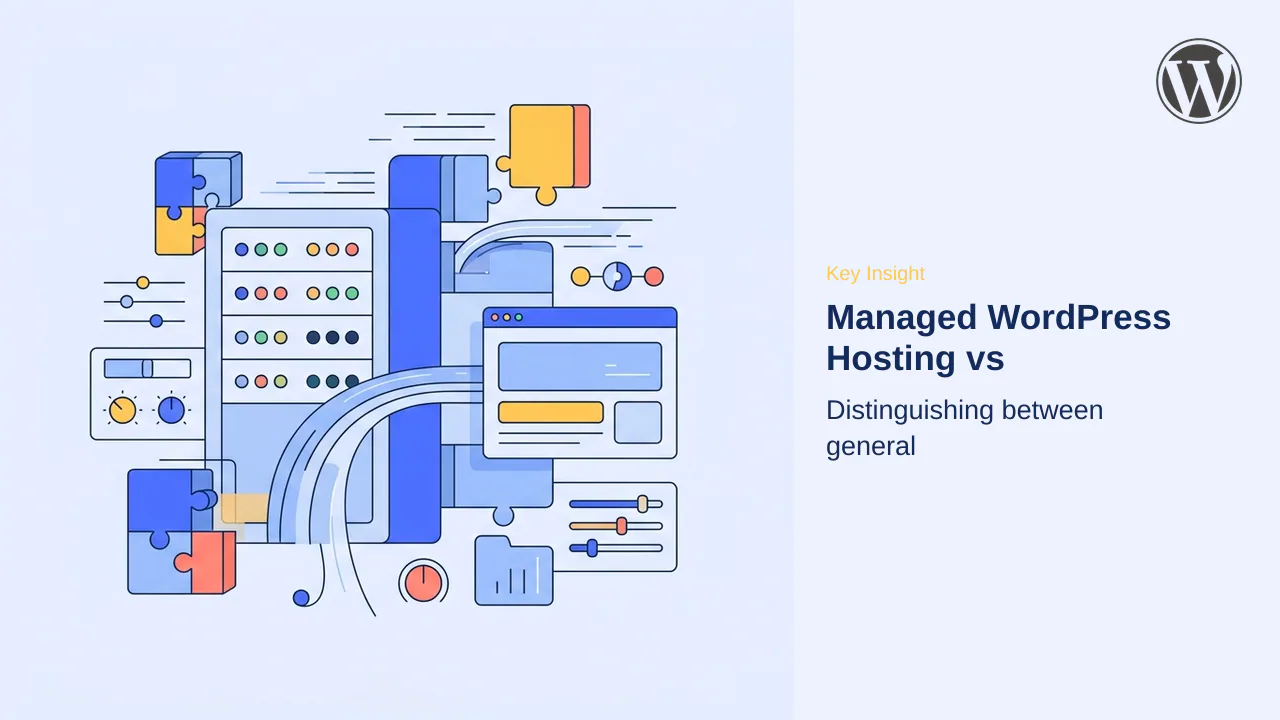
The distinction between general hosting and managed WordPress environments often determines whether a business spends time on server administration or revenue-generating activities. Managed WordPress hosting is purpose‑built for WordPress, meaning the provider configures servers specifically for the platform’s performance requirements. This typically includes specialized caching layers, CDN integration, and automated updates for core files and plugins.
Performance Optimization Techniques
General shared hosting provides a broad platform where resources are distributed across many users, often leaving optimization to the site owner. In contrast, managed WordPress hosting shifts the technical burden to the provider. These environments utilize server-level caching and database tuning to handle dynamic requests that would otherwise slow down a standard shared server. By offloading these tasks, the hosting environment ensures that resources are prioritized for genuine visitor traffic rather than background maintenance.
When to Upgrade to Managed WordPress
A website owner should consider moving from general hosting to managed WordPress hosting when website performance, reliability, security, and maintenance start becoming more important than simply keeping hosting costs low. As a site evolves from a simple brochure to a business-critical asset, the cost of downtime or slow performance often exceeds the price difference of a managed plan. Consider the following indicators that it is time to transition:
- Traffic volume has become consistent or shows frequent growth spikes.
- Website speed is directly impacting conversion rates or search engine rankings.
- The site relies on resource-heavy plugins like WooCommerce.
- Manual maintenance, such as patching security vulnerabilities or testing updates, consumes excessive time.
- The business requires a staging environment to test changes safely before deployment.
Value changes when you stop managing the server and start managing the business. Moving to a managed environment is rarely just an infrastructure upgrade; it is a strategic shift toward operational efficiency.
Beyond basic performance, managed environments provide a critical safety net for business continuity. Because these platforms are purpose-built, they often include integrated staging environments that allow for risk-free testing of plugins, theme updates, or custom code changes. This capability is essential for businesses that cannot afford the downtime associated with a broken site after a routine update. By isolating the development process from the live environment, owners can verify that every change functions correctly before it impacts real customers.
Furthermore, the shift to managed hosting often includes proactive security measures that go beyond standard shared plans. These providers typically implement server-level firewalls, automated malware scanning, and specialized brute-force protection tailored to the unique vulnerabilities of the WordPress ecosystem. When a provider manages these security layers, the business owner is relieved of the burden of configuring complex security plugins or monitoring for emerging threats manually. This transition allows the focus to remain on core business objectives rather than the technical maintenance of the underlying infrastructure.
Finally, the support model in a managed environment is fundamentally different. Instead of general support staff who may only know the basics of server management, managed WordPress hosts employ specialists who understand the platform’s specific architecture, database structure, and common plugin conflicts. This expertise ensures that when issues arise, the resolution is faster and more precise. The value of this specialized support becomes most apparent during critical moments, such as when a site experiences an unexpected traffic surge or requires rapid troubleshooting to restore service. Investing in this level of service is a strategic decision to prioritize operational stability over the lower initial costs of a generic hosting plan.
Cloud Hosting vs Traditional Hosting Models
The terms “cloud hosting” and “traditional hosting” are often used interchangeably in marketing, but they describe fundamentally different approaches to delivering website infrastructure. Understanding the distinction is useful not only from a technical standpoint, but also when deciding what level of resilience, scalability, and cost structure your website actually requires. Traditional hosting generally refers to websites running on a single server environment. This can take the form of shared hosting, a VPS, or a dedicated server, but in each case the resources ultimately originate from one physical machine. This model has been the backbone of the web for many years and continues to be widely used across millions of websites.
Cloud hosting, by contrast, is built on distributed infrastructure. Instead of relying on a single server, resources are drawn from a network of interconnected systems working together as a unified platform. This design allows workloads to be balanced dynamically, and in many cases allows services to remain online even if individual hardware components fail. The practical difference becomes most visible in how each approach handles growth and reliability. Traditional hosting environments are typically more static, meaning capacity is tied directly to the limits of a given server. Cloud hosting environments are more flexible, allowing resources to be scaled as demand increases, which is particularly useful for websites experiencing variable traffic patterns or rapid growth.
It is important to note that neither approach is universally superior. Traditional hosting still has a strong place in the market, particularly for small websites, brochure-style business pages, or applications with predictable traffic. In these cases, simplicity and cost efficiency often matter more than elastic scalability. Cloud hosting becomes more relevant where uptime, redundancy, and scalability are more critical. E-commerce platforms, high-traffic websites, and business systems that cannot tolerate downtime generally benefit from distributed infrastructure. However, the gap between traditional and cloud hosting has narrowed in recent years, as many providers now operate hybrid systems that combine elements of both.
This evolution has led to a situation where many modern hosting services are effectively cloud-based even when presented in familiar formats such as shared hosting or VPS plans. In practical terms, the decision between cloud and traditional hosting should not be framed as a binary choice of old versus new technology, but rather as a question of fit. Businesses with stable requirements and predictable workloads may find traditional-style hosting perfectly sufficient, while those requiring flexibility, resilience, or growth potential will typically lean toward cloud-based solutions.
As the hosting industry continues to mature, the distinction between these models will likely become less about marketing terminology and more about underlying architecture. For most users today, the most important factor is not what the service is called, but whether it delivers the performance, stability, and scalability their project requires.
Beyond the architectural differences, the financial implications of each model often dictate the long-term viability of a hosting strategy. Traditional hosting frequently utilizes fixed-cost pricing, which provides predictable monthly expenses for businesses with stable, static traffic. This predictability is advantageous for budgeting, as it eliminates the risk of variable overage charges or fluctuating resource costs. However, this stability comes with a ceiling; when traffic exceeds the capacity of the single server, the business must either accept performance degradation or invest in a manual, often disruptive, migration to a larger server tier.
Cloud hosting introduces a more dynamic cost structure that aligns with actual consumption. While this can lead to higher costs during periods of intense traffic, it ensures that the website remains performant and accessible, preventing the lost revenue associated with downtime or slow load times. For businesses in growth phases, the ability to scale resources automatically—or with minimal intervention—often outweighs the simplicity of a fixed-price traditional plan. The transition to cloud infrastructure is therefore less about the technology itself and more about the business’s tolerance for risk and its need for operational agility.
Ultimately, the choice between these models involves evaluating the cost of potential downtime against the cost of infrastructure flexibility. A small business with a static brochure site may find that the extra cost of cloud redundancy provides little tangible value, whereas an e-commerce store would find the same investment essential for maintaining customer trust. By focusing on the specific performance and reliability requirements of the project, businesses can select an infrastructure model that supports their current needs while providing a clear path for future expansion. The pricing question is whether your infrastructure matches your growth trajectory.
Ultimately, the choice between these models involves evaluating the cost of potential downtime against the cost of infrastructure flexibility. A small business with a static brochure site may find that the extra cost of cloud redundancy provides little tangible value, whereas an e-commerce store would find the same investment essential for maintaining customer trust. By focusing on the specific performance and reliability requirements of the project, businesses can select an infrastructure model that supports their current needs while providing a clear path for future expansion.
The pricing question is whether your infrastructure matches your growth trajectory. Selecting a hosting provider requires a shift in perspective: move away from viewing hosting as a commodity and toward viewing it as a foundational business asset. The initial price tag is a poor predictor of total cost, as the most expensive hosting experiences are often those that result in lost revenue, technical debt, or the need for emergency migrations due to inadequate support or poor performance under load.
Long-term satisfaction depends far more on performance, support quality, and ease of scaling than on obtaining the lowest initial price. A provider that prioritizes infrastructure resilience—through proactive monitoring, automated backups, and purpose-built performance tuning—effectively acts as an extension of your own team. By aligning your hosting choice with your specific industry needs and anticipated growth, you avoid the common trap of paying for resources you cannot use or, conversely, being forced into expensive, reactive upgrades when traffic spikes occur.
Ultimately, the best hosting provider delivers the right balance of reliability, performance, security, support, and long-term scalability. Before committing to a long-term contract, evaluate whether the provider offers the tools necessary for your specific technical requirements, such as staging environments for safe updates or managed configurations that reduce your administrative burden. When you stop managing the server and start managing the business, you gain the clarity needed to distinguish between a temporary bargain and a sustainable investment. Prioritize architectural fit and support responsiveness today to ensure your digital presence remains stable, secure, and ready for whatever growth comes next.